Is Pothos Toxic to Cats and Dogs?
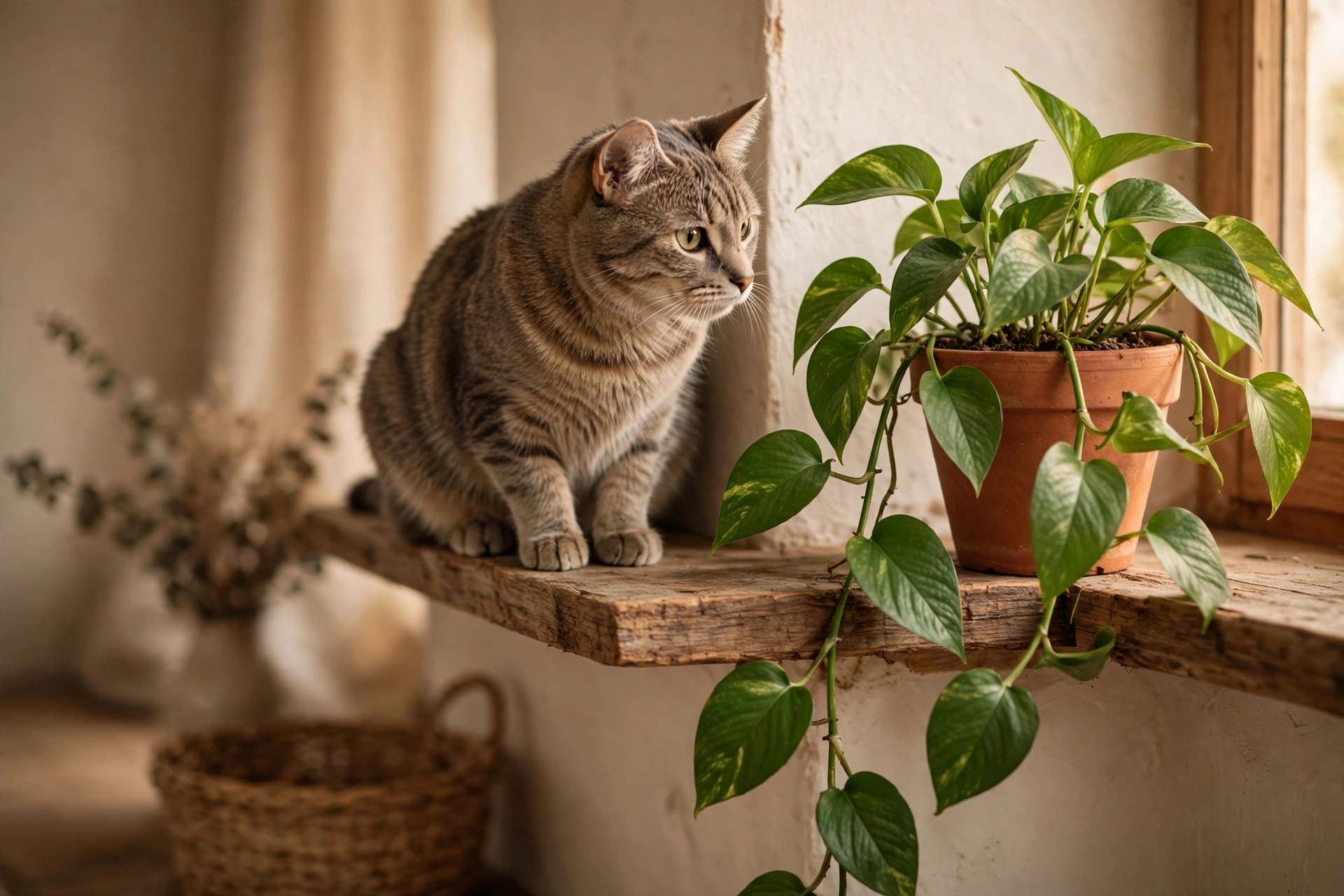
It is the 2 a.m. search nobody wants to make: you find your cat under the pothos with a chewed leaf, or come home to teeth marks and a guilty face, and now you need a straight answer fast — not a lecture, not a maybe.
So here it is, plainly: yes. Is pothos toxic to cats? It is — pothos appears on the ASPCA’s toxic plant list for cats and for dogs. But this particular poison comes with unusual mercy built in, and understanding exactly what it does (and what it does not do) tells you how worried to be and what to do in the next thirty minutes. That is what this page is for.
Quick Answer
Is pothos toxic to cats? Yes. Every part of the plant carries microscopic calcium oxalate crystals that cause immediate burning pain in the mouth when chewed — which is also why most cats stop after a bite or two. Expect drooling, mouth-pawing, and possibly vomiting; serious outcomes are rare, but any trouble breathing or swallowing means a vet immediately. If your cat or dog has chewed pothos, rinse the mouth gently with water and call your vet or ASPCA Animal Poison Control on (888) 426-4435 — a consultation fee may apply.
Table of Contents
What makes pothos toxic: crystals, not a systemic poison
Pothos (Epipremnum aureum) and its whole family defend themselves with raphides: needle-shaped crystals of calcium oxalate packed into the plant’s tissues, in every leaf, stem, and root. When a cat bites a leaf, those crystals are released into the soft tissue of the mouth and tongue, producing instant, intense irritation — burning, pain, swelling of the lips and mouth, drooling, and sometimes vomiting.
Two facts follow from that mechanism, and both matter:
The pain is the protection. Because the burning starts with the first bite, the dose is usually self-limiting: most cats chew once, react, and stop. Large ingestions are uncommon precisely because the plant hurts to eat.
It is a local injury, not an organ poison. Calcium oxalate crystals irritate where they touch — mouth, throat, and stomach lining. Pothos is NOT one of the plants that silently damages kidneys or liver, and it should never be confused with the true lilies (Lilium species), which are a genuine kidney-failure emergency for cats. The dangerous end of pothos poisoning is swelling: a badly swollen mouth or throat can interfere with swallowing and, in the worst cases, breathing. That is the red flag to watch for, below.
The same crystals and the same story apply to the close relatives you will find sold under similar names: satin pothos (Scindapsus pictus) is also toxic, and heartleaf philodendron — the plant pothos is most often confused with — carries calcium oxalates too. If it trails and looks like a pothos, treat it as one until you have a firm identification.
Signs your cat (or dog) has chewed pothos
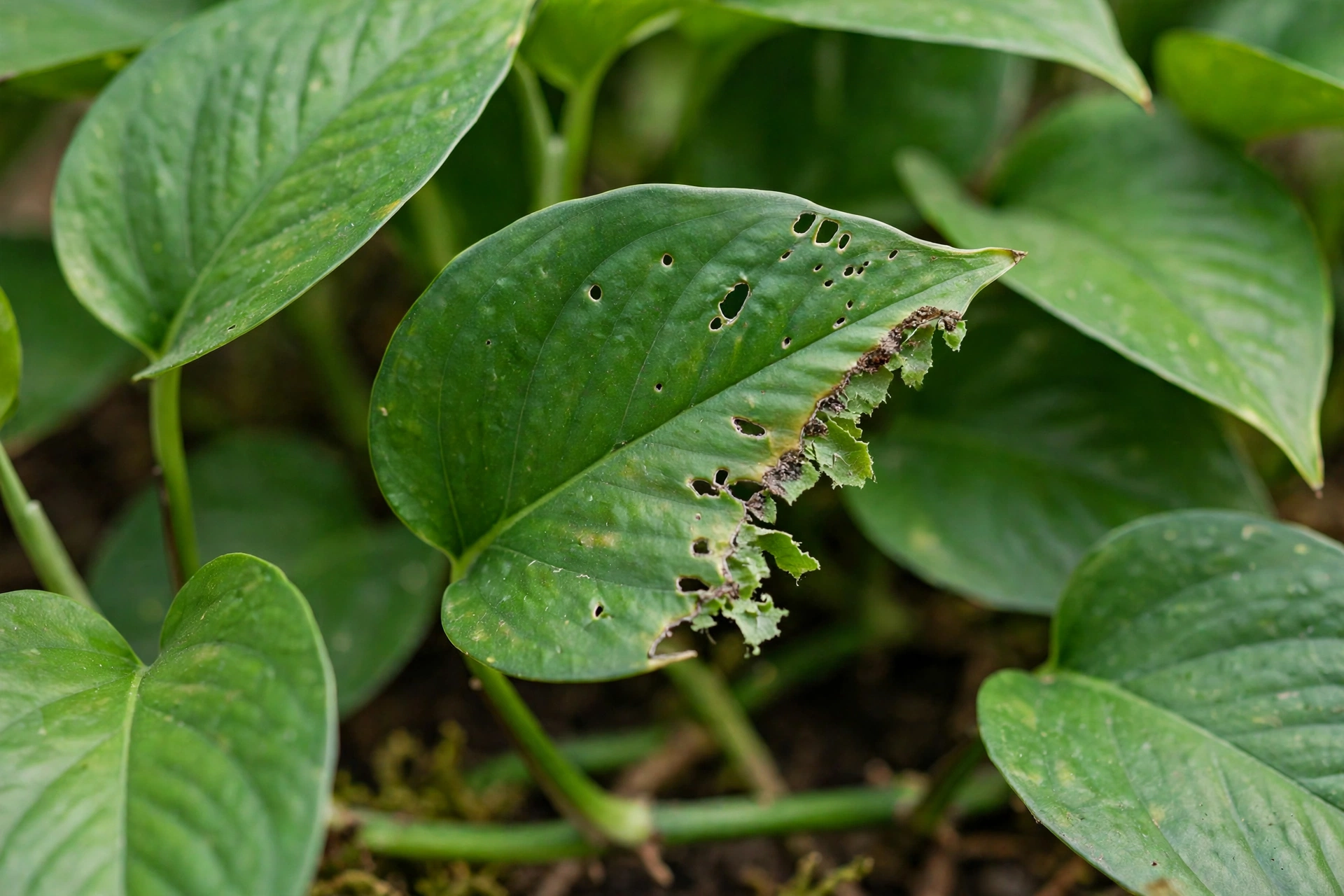
The first signs usually arrive within minutes — the crystal reaction is fast:
- Pawing at the mouth, rubbing the face on the floor or furniture
- Drooling, sometimes heavily, or foaming at the mouth
- Head shaking, lip smacking, crying out, refusing food
- Red or swollen lips, tongue, or gums
- Vomiting, once or a few times
- In larger chews: difficulty swallowing, and a swollen mouth or throat
Go to a vet or emergency clinic immediately, do not wait and watch, if you see: labored or noisy breathing, inability to swallow, severe swelling of the mouth or face, repeated vomiting, or a pet who is distressed and cannot settle. These are uncommon — but they are the cases where minutes matter.
For the typical small chew, signs are miserable but temporary: the mouth pain and drooling generally ease over hours, and most pets are back to normal within about 12–24 hours, especially with a vet’s supportive care (pain relief and anti-nausea help are the usual tools). A check-in call costs little; make it even when things look mild, and always make it for kittens, seniors, and any pet with health issues.
What to do in the first 30 minutes
- Clear the mouth. Move the plant away. If you can do it safely, gently remove any leaf pieces still in the mouth.
- Rinse. Offer fresh water to drink; if your pet allows it, a gentle rinse of the mouth with water helps wash crystals out. A small drink of milk or a little wet food can soothe and dilute — ask your vet on the call.
- Do NOT induce vomiting unless a vet specifically instructs it. The crystals burn going down; bringing them back up burns twice.
- Call. Your own vet, an emergency clinic, or ASPCA Animal Poison Control: (888) 426-4435 (a consultation fee may apply). Tell them the plant (pothos, Epipremnum aureum), roughly how much was chewed, and what signs you are seeing.
- Watch for two hours. Note drooling, swelling, breathing, and appetite, and report changes on the call or at the clinic. Photograph the plant if you are heading in — identification speeds treatment.
Dogs: the same crystals, the same answer
Everything above holds for dogs, who appear on the same ASPCA listing for pothos. Dogs tend to chew more enthusiastically than cats and can get further into a plant before the pain stops them, so watch for the full sign list including vomiting and appetite loss. The first-30-minutes steps are identical: clear, rinse, do not induce vomiting, call.
Can cats and pothos share a home?
Yes — many do, safely, for years. The honest condition is management, because “my cat never touches plants” is a sentence owners say right up until the day it happens. The arrangements that actually work:
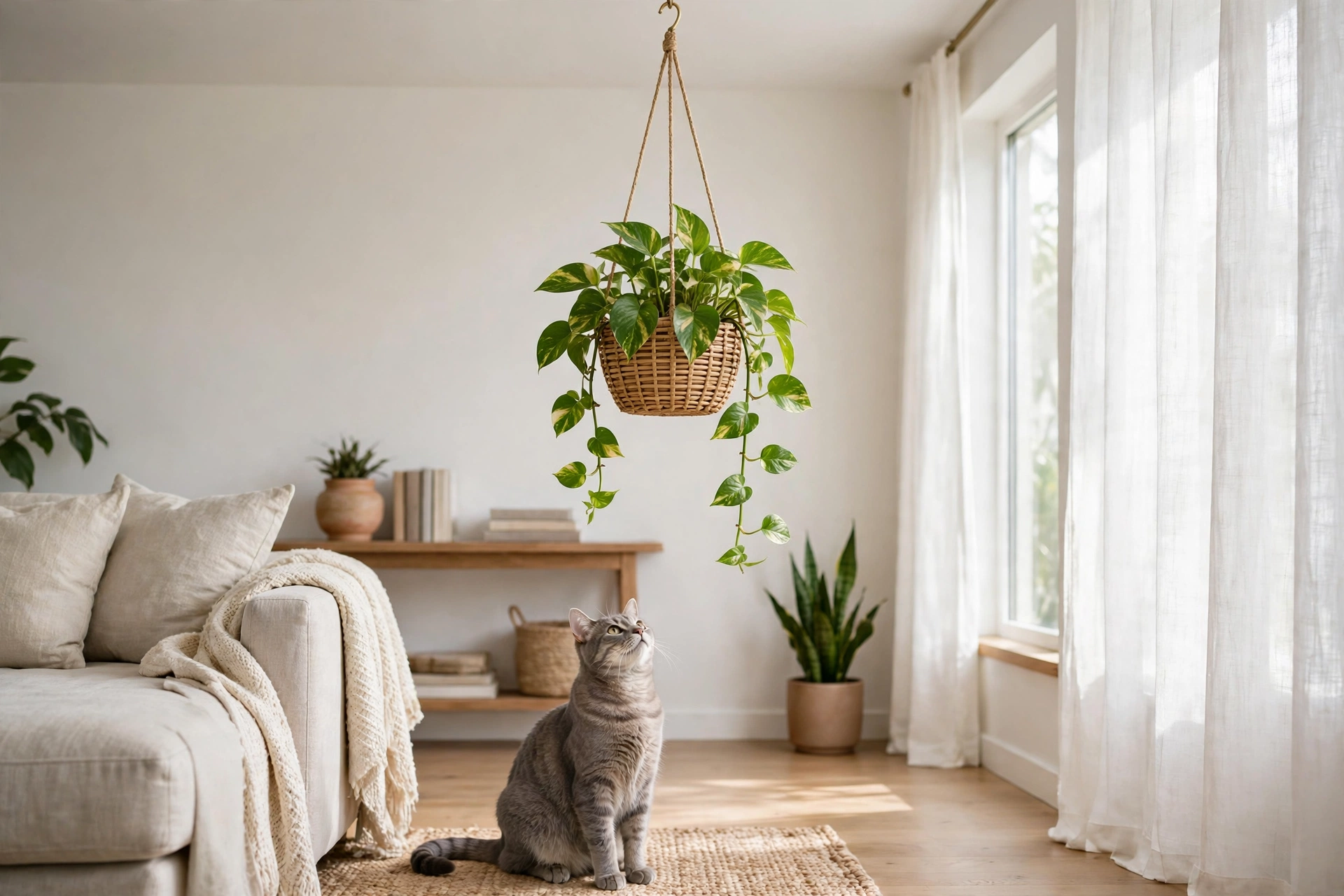
- Height with no launchpad. A high shelf only works if there is no furniture route to it — cats do not respect altitude, they respect access. Remember that pothos TRAILS: a plant that is out of reach in spring can dangle into reach by summer. Trim the trails, or hang the basket where even the longest vine ends well above jumping range.
- A room of its own. A pothos in a bedroom or study whose door stays shut is a clean, permanent solution — and pothos is happy almost anywhere, as our pothos care guide covers.
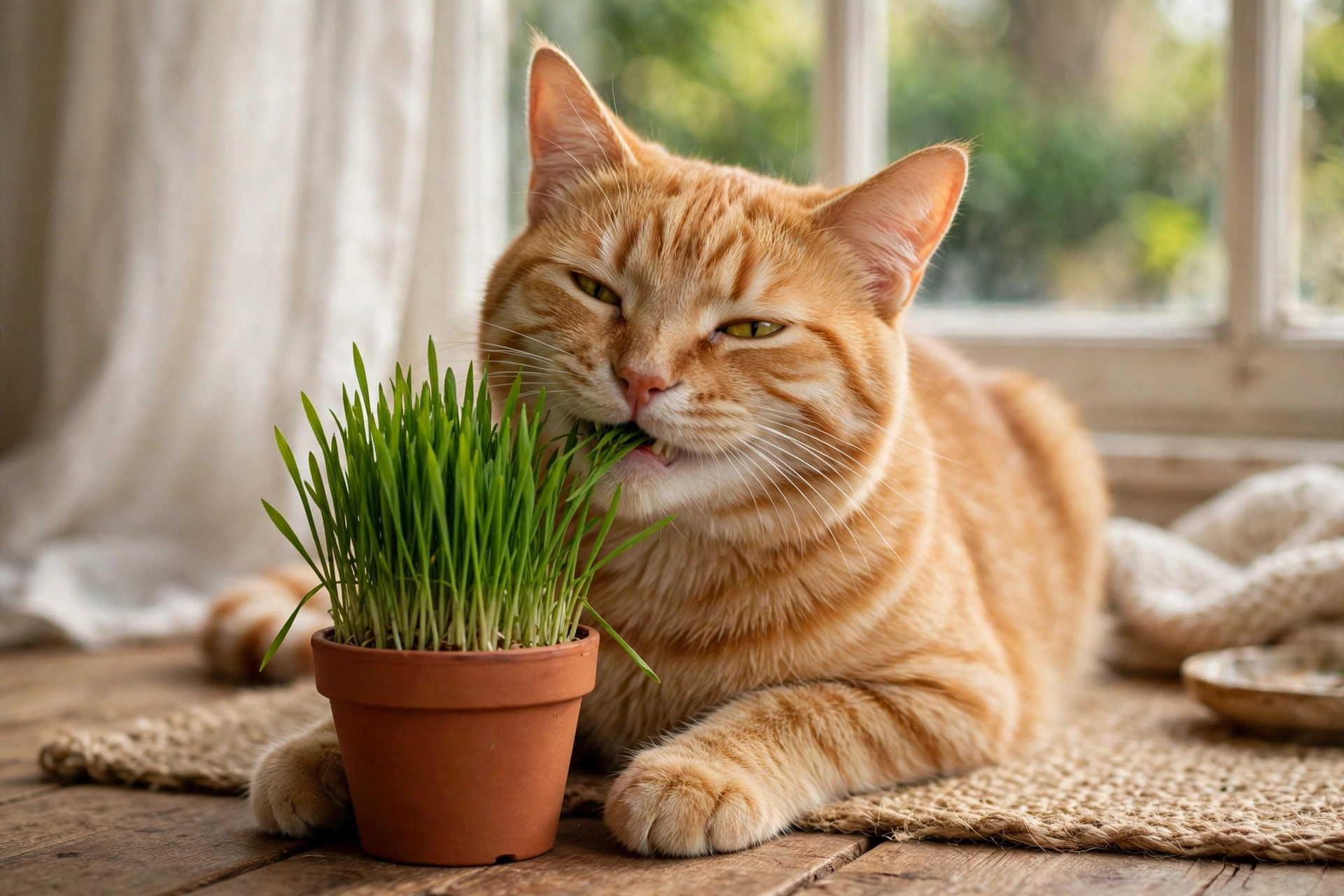
- Something legal to chew. A pot of cat grass on the floor gives a chewing cat a sanctioned target and genuinely reduces raids on the shelf.
- Taste deterrents — with modest expectations. Bitter apple sprays deter some cats and are ignored by others; use them as a backup layer, never as the only barrier.
- The graceful exit. If your cat is a determined plant-chewer and management fails, rehoming the plant to a pet-free friend is not defeat — it is the decision that lets both of you relax. There are too many good plants (next section) to live on red alert.
Beautiful, popular, and genuinely pet-safe
If the pothos has to go — or you are choosing plants in a cat home from now on — you do not have to give up lush. These widely sold favorites are listed as non-toxic to cats and dogs by the ASPCA: spider plant (whose care guide anchors our collection), Boston fern, parlor palm, calathea and prayer plants, peperomia, African violet, and haworthia. Our complete pet-safe houseplants list checks each one properly, with the look-alikes that cause the mix-ups.
You can check any plant, including this one, in the ASPCA’s toxic and non-toxic plants database before it comes home.
Pothos and pet questions, answered
Is pothos deadly to cats?
Almost never. Pothos poisoning is a painful mouth and throat injury rather than an organ poison, and because the burning starts with the first bite, cats rarely eat enough for the severe end of the range. Fatal outcomes are essentially unheard of with prompt care. The genuinely dangerous scenario is swelling that compromises breathing — which is why breathing trouble, not the plant’s reputation, is your emergency trigger.
How much pothos does a cat have to eat to get sick?
Less than you might think for symptoms, more than most cats will volunteer for. A single determined bite releases enough crystals to cause drooling and mouth pain. Severity then scales with how much was chewed — which is usually little, because the pain stops the meal. Do not use “it was only a leaf” as a reason to skip the vet call; use the signs you can see instead.
Are fallen pothos leaves a risk too?
Yes — the crystals are structural, not a surface coating, so a dried leaf on the floor or a cutting rooting in a glass of water carries the same hazard as the plant on the shelf. Sweep up dropped leaves, keep pruning clippings out of reach until they are binned, and put propagation jars where a drinking cat cannot reach them.
My cat brushed against the plant but did not chew it. Is that a problem?
Almost certainly not. The crystals are inside the tissue and are released by chewing or crushing; ordinary contact with intact leaves does not deliver them. The exception is the sap: if you have been pruning, the cut ends can irritate skin — yours as well as a pet’s — so wipe up sap, keep fresh cuttings away, and wash your own hands after handling pruned material.
Can a cat recover fully from eating pothos?
Yes — the expected outcome is a full recovery. The injury is to the mouth and upper digestive tract lining, which heals; with supportive vet care for pain and nausea, most cats are comfortable within hours and entirely themselves within a day or two. There is no cumulative or delayed organ damage to worry about afterward, unlike the true emergencies (lilies for cats) that this plant is sometimes confused with.
Is satin pothos safe because it is not a “real” pothos?
No. Satin pothos (Scindapsus pictus) is a different genus but the same family trick: calcium oxalate crystals throughout, and it sits on the ASPCA toxic list for cats and dogs as well. The same caution applies to heartleaf philodendron, the pothos look-alike most often mislabeled in stores. When in doubt about any trailing aroid, check the ASPCA list before it goes on a shelf a cat can reach.


One Comment