White Mold on Houseplant Soil: Is It Dangerous?
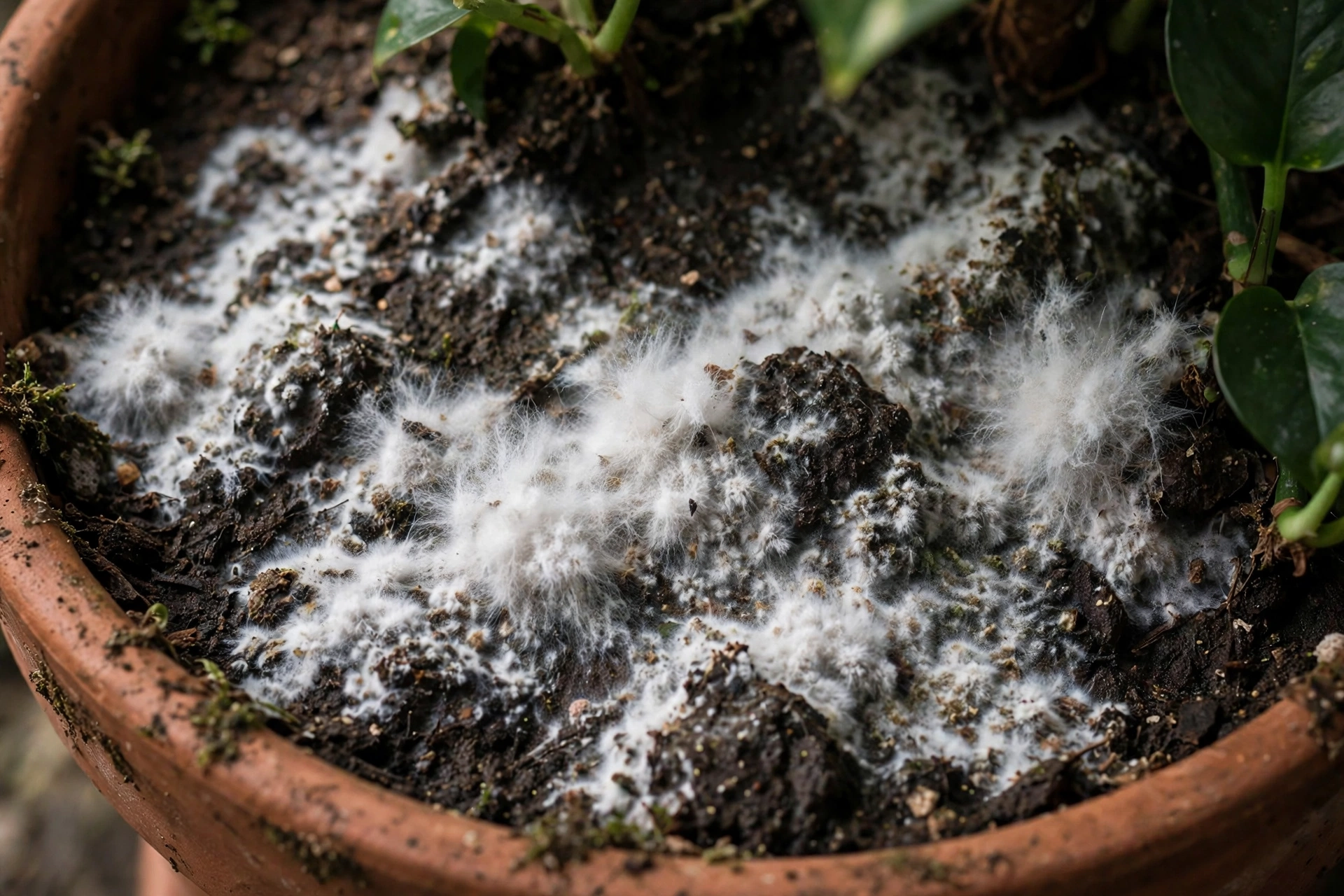
You water your plant, glance down, and the soil has grown a coat: white, fuzzy, spreading across the surface like frost. The first thought is usually alarm — is that dangerous? Is the plant diseased? Is it spreading through the house?
Take a breath. White mold on plant soil is one of the most common sights in indoor gardening, and it is very rarely what it looks like. The fuzz is almost always a harmless soil fungus doing a normal job — but it is also a message about your watering that is worth reading. This guide explains what it is, how to be sure it is not one of its three look-alikes, what to do about it, and the one change that stops it coming back.
Quick Answer
White mold on plant soil is almost always a saprophytic fungus — a decomposer feeding on dead organic matter in the mix, not on your plant. It does not infect healthy roots and is not a danger to a healthy plant. Remove it by scraping off the top layer of soil, then let the surface dry out properly between waterings: the mold is telling you the surface stays wet too long, and the fix is dryness and airflow, not fungicide.
Table of Contents
Make sure it is mold: the three look-alikes
White on a pot is not always mold, and the impostors need different answers:
- Actual soil mold is soft, fuzzy, or cottony, growing in patches ACROSS the soil surface. It smears if you touch it and may have a faint earthy smell. That is this article’s subject.
- Mineral salt crust is hard, dry, and crystalline — a white or off-white crust on the soil edges and pot rim that crunches rather than smears. That is fertilizer and tap-water salts building up; it needs a soil flush, and our spider plant brown tips guide covers the same buildup from the leaf end.
- Perlite is the white gravel already mixed INTO your potting soil — hard little chunks, present since the day you potted, often floating to the surface after watering. It is an ingredient, not a growth. If it was there at potting time and never spreads, leave it alone.
- Mealybugs are the one look-alike that matters: if the white fluff is ON the plant — in leaf joints and along stems, in waxy cottony clusters — that is a pest infestation, not soil mold, and it needs pest treatment, not this guide.
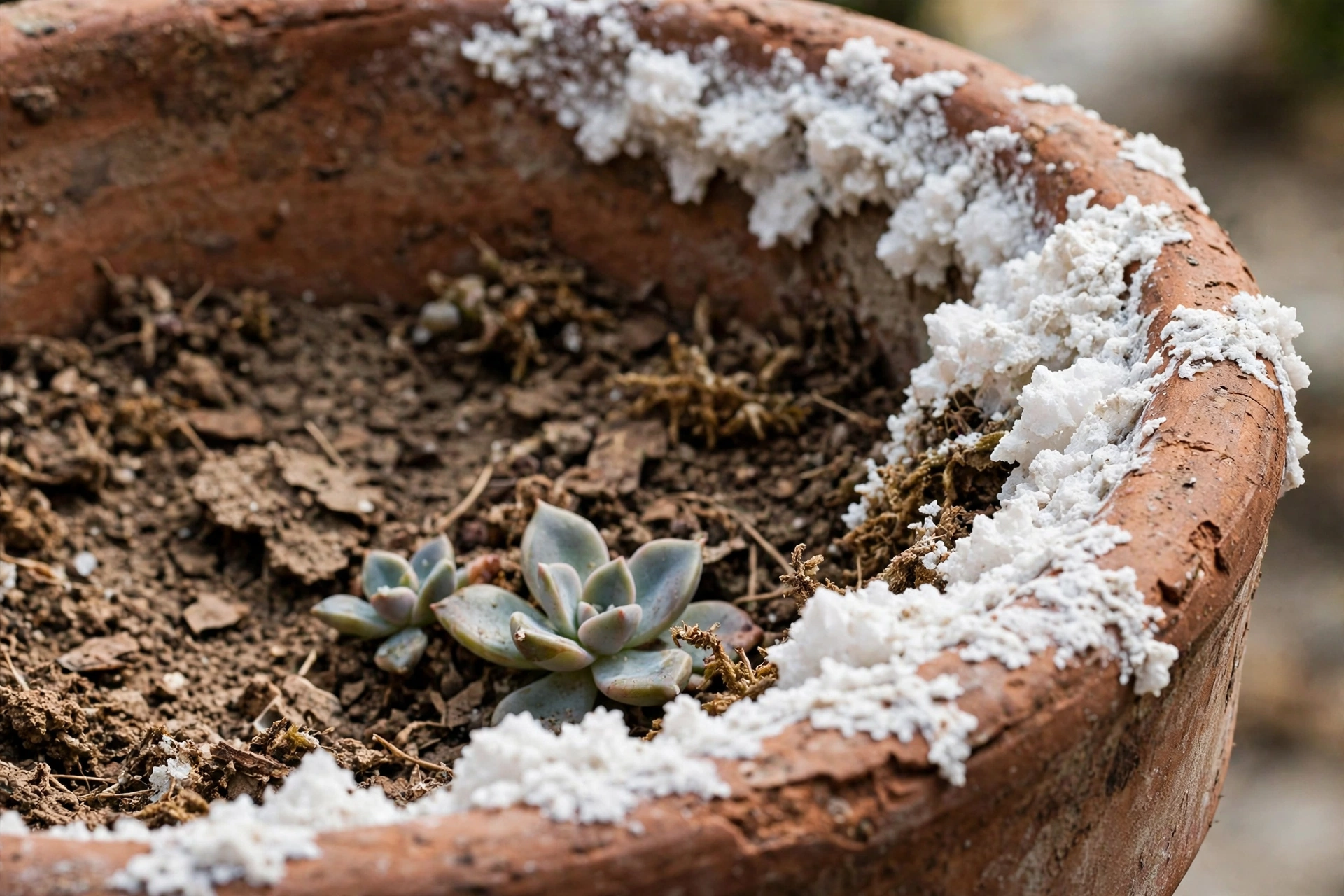
Still unsure? Mold grows. Photograph the patch today; a fungus patch will visibly expand across damp soil within days, while salt and perlite sit exactly as they were.
Is it dangerous — to the plant, to you, to pets?
To the plant: no, not directly. Saprophytic fungi eat dead material; they do not attack living roots or stems, and in outdoor soil they are a sign of healthy decomposition. Indoors, the mold itself can be left and the plant will not care. Read it as an instrument, though: the conditions that grow surface mold — soil staying wet, still air, decaying matter on the surface — are the same conditions that eventually rot roots and breed pests. The mold is the smoke, not the fire; your watering is smoldering.
To you: for healthy people, the risk is low — these are among the most common fungi on earth, and their spores are in every breath of outdoor air. Two sensible exceptions: if you have mold allergies, asthma, or a weakened immune system, treat a moldy pot with respect — scrape it outdoors or with a mask on, and do not keep a heavily molded plant beside your bed or desk until it is cleaned up.
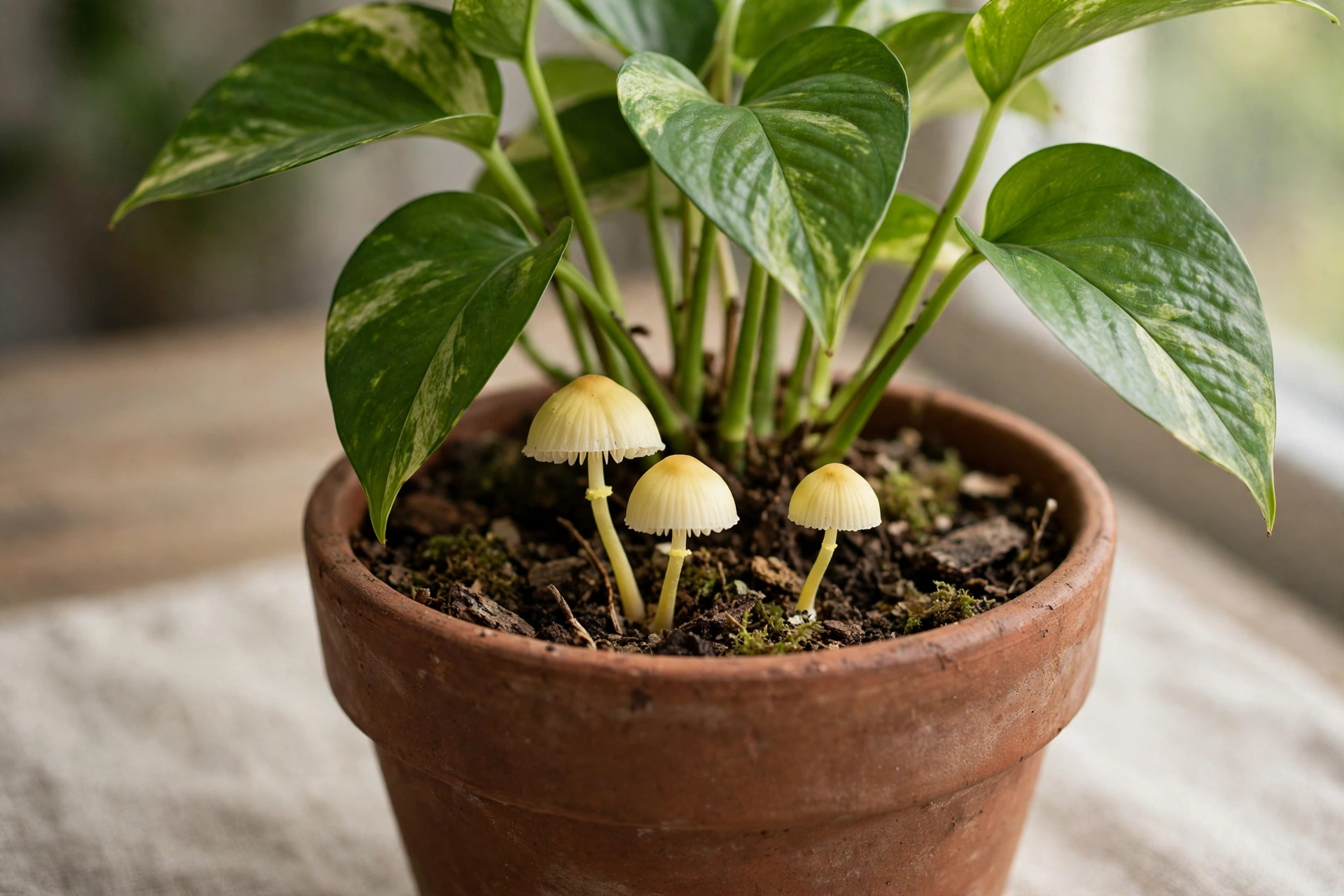
To pets: surface soil mold is not a noted pet toxin, and a curious sniff is not an emergency. Digging and eating soil is another matter — discourage it for the same reasons you would discourage eating any potting mix (fertilizer, perlite, and whatever has been watered in). The related case to know: if small yellow mushrooms appear in a pot (a common soil fungus fruiting), remove them — those ARE best kept away from pets and children, because they should not be eaten.
What causes it
Mold spores are already everywhere, including in every bag of potting mix. An outbreak needs only the conditions, and they are always some combination of these four:
- A surface that stays wet. Watering a little and often, or a mix that holds water at the top for days, keeps the fungus fed and happy.
- Food on the surface. Fallen leaves, spent flowers, and organic-rich mix are a buffet for a decomposer — it is literally there to eat them.
- Still, humid air. A plant in a corner, crowded among others, with no air movement, keeps a damp microclimate at its soil line.
- Low light at the soil. A shaded surface dries slowly; a bright one dries between waterings.
Notice what is missing from that list: a dirty home, a sick plant, or bad luck. Mold is a conditions report, nothing more.
The fix: scrape, dry, and change the conditions
Step 1: Scrape it off
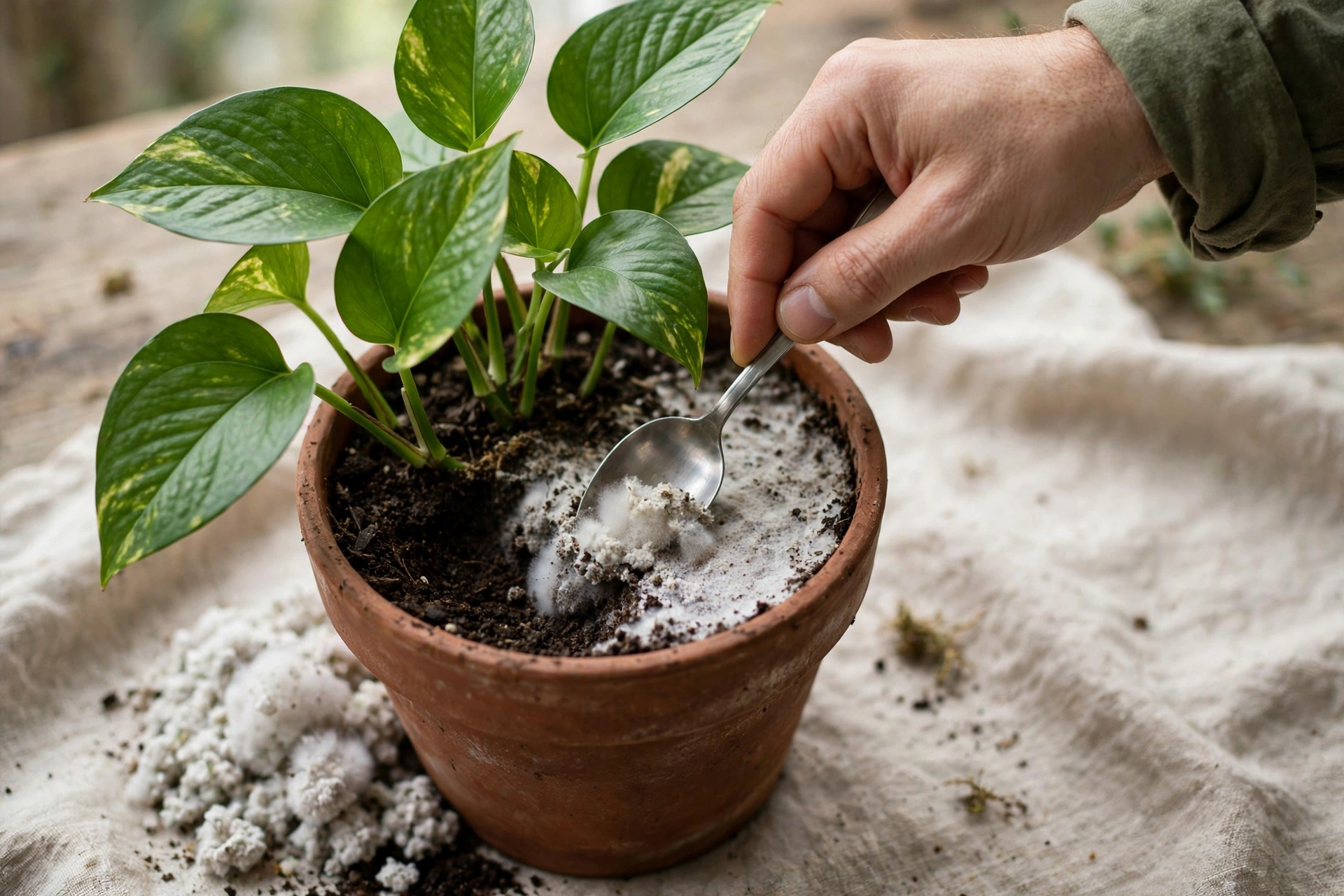
With a spoon or small trowel, lift off the fuzzy growth and the top half-inch of soil beneath it — that is where the fungus body lives. Bag it and put it in the household trash, not the compost, and wash the spoon afterward. Wipe the pot rim too. Work outdoors or in a ventilated spot if mold bothers your airways. Do not stir the mold down into the mix; that just replants it.
Step 2: Replace and dry
Top up with fresh, dry potting mix. Then give the plant a deliberate dry-down: let the top 1–2 inches of soil dry completely before the next watering — deeper than your usual threshold, just for the next couple of cycles, as long as your plant species tolerates it. Sunlight on the soil helps: a few hours of bright light on the surface is hostile territory for mold.
Step 3: Fix the conditions
Move air: space the plant from its neighbors, or put it where a room’s normal air movement reaches it. Clear fallen leaves off the surface as they drop. And adjust the watering that caused it — water deeply but less often, letting the surface dry between drinks, and consider bottom-watering for a few weeks, which wets the roots while the surface stays dry. This is also exactly the regime that defeats fungus gnats, the other wet-soil tenant — the two problems share one cure.
If it keeps coming back: repot
Mold that returns within days, three rounds running, means the mix itself is loaded and staying wet through its whole depth — usually an old, compacted mix. Repot: shake off most of the old soil outdoors, check the roots while you are there (white and firm is healthy; brown and mushy gets trimmed), and replant in fresh, free-draining mix in a clean pot. That resets the system completely.
About cinnamon and peroxide
You will see two kitchen remedies everywhere, and both deserve an honest label. Ground cinnamon has mild antifungal properties and a dusting on the surface does no harm — think of it as a weak assistant to the dry-down, not a treatment on its own. Diluted hydrogen peroxide can knock back visible growth on contact, but it fades within minutes, does not change the conditions, and repeated drenching is hard on the soil life your plant relies on. Neither replaces the scrape-and-dry routine; the mold returns to any surface that stays wet, treated or not.
Keeping it from coming back
- Let the top 1–2 inches dry between waterings — the single habit that prevents mold.
- Pick fallen leaves and spent flowers off the soil surface weekly.
- Give plants air: spacing, and a spot with ordinary room air movement.
- Drain every saucer; a pot standing in water keeps its surface wet forever.
- Bottom-water plants that repeatedly mold — dry surface, wet roots, no nursery on top.
The University of California’s IPM houseplant problems guide is a good second opinion when a growth on the soil surface needs diagnosing.
White mold on soil questions, answered
Is white mold on plant soil dangerous to my plant?
No — the fungus itself feeds on dead organic matter and does not infect healthy roots or leaves. The honest caution is indirect: mold tells you the soil surface stays wet for long stretches, and those same conditions, left running, are what lead to root rot and fungus gnats. Clean the mold, read the message, adjust the watering.
Can I just leave the mold alone?
You can, and many growers do — the plant will not suffer from the fungus itself. Most people remove it anyway because it looks neglected, can smell musty in a small room, and keeps delivering its message about wet soil. If you leave it, at least act on the message: a drying surface usually shrinks the patch on its own.
Why does mold keep coming back on my plant’s soil after I scrape it?
Because scraping removes the growth, not the conditions. Spores are always present in soil and air; if the surface is still staying wet, with food on it and no airflow, a new patch is a matter of days. Work through the conditions list — watering interval, surface debris, air movement, light on the soil — and if three clean-ups fail, repot into fresh mix.
Is the white stuff on my soil mold or fertilizer salts?
Touch it. Mold is soft and fuzzy and grows in patches across damp soil; salt crust is hard, dry, and crystalline, gathering at the soil edges and pot rim — and it appears on pots whose soil dries out fully between waterings, the opposite pattern from mold. The fixes differ too: mold wants a drier surface; salts want a thorough flush with clean water to wash them through.
Are the little yellow mushrooms in my plant pot dangerous?
They are the fruit of another common soil fungus (a Leucocoprinus species that lives in potting mix worldwide), and like surface mold, they do not harm the plant. Pull them out as they appear — mainly because they should not be eaten, so keep them away from curious pets and children — and treat their appearance as the same wet-soil message: let the surface dry more between waterings and they stop coming.
Should I throw away a plant with moldy soil?
Almost never. Surface mold is a cosmetic, fixable conditions problem, solved with a spoon, a dry-down, and adjusted watering — the plant itself is uninfected. The rare exception is a plant that is simultaneously collapsing with soft stems and a sour smell: that is root rot, a different and serious diagnosis, where the mold on top was just the first visible warning.