Why Is My Snake Plant Drooping?
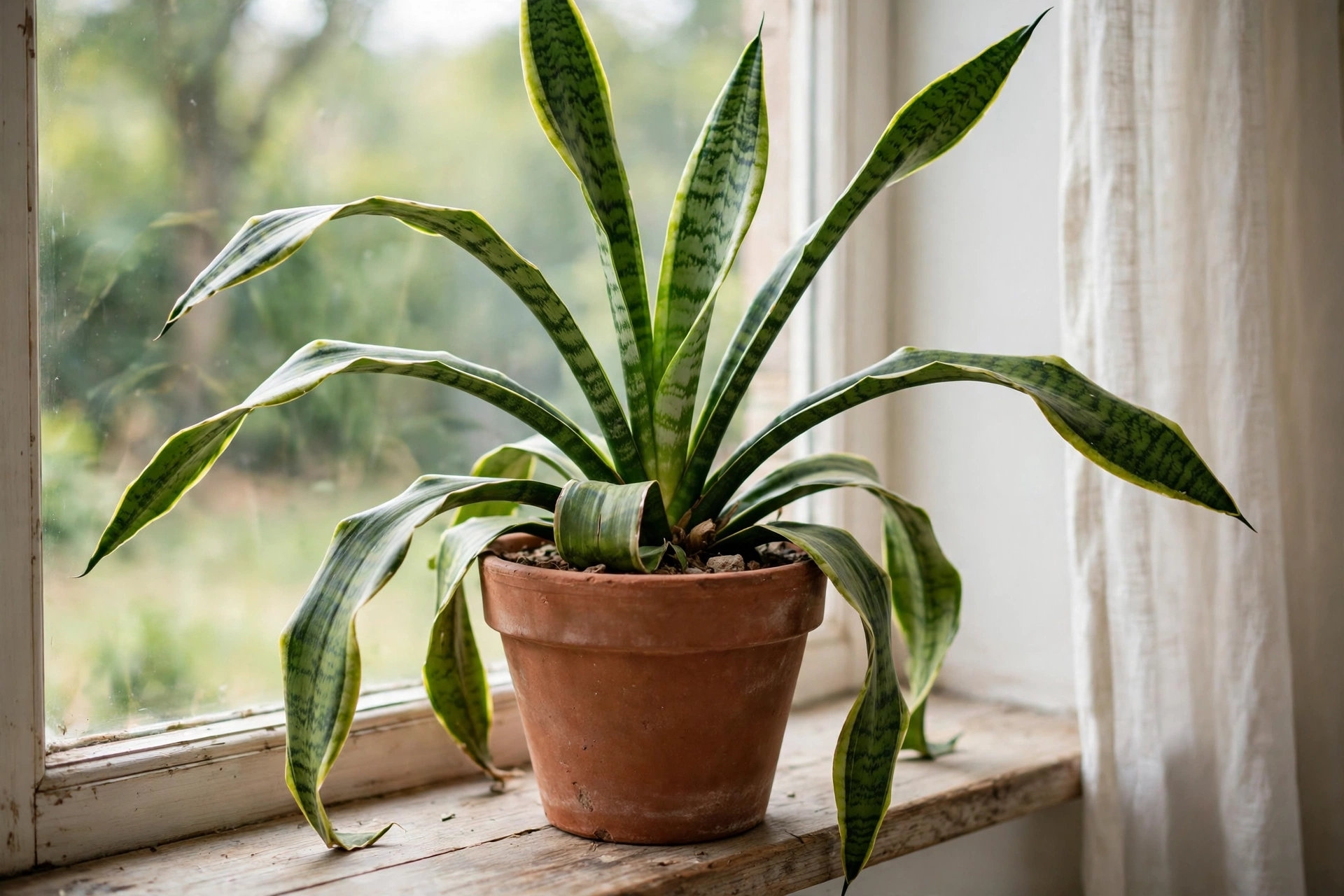
A snake plant is supposed to stand like a row of green swords. So when the leaves start leaning, flopping outward, or folding over at the base, it looks doubly wrong — this is the plant that survives everything. Owners usually reach for the watering can, reasoning that a drooping plant must be a thirsty plant. With this species, that instinct is the most dangerous one you can have.
Because here is the twist: snake plant drooping is almost never about thirst. It is the plant’s distress flare for trouble at its base — and the number one cause is too much water, not too little. This guide reads the droop the way you should: leaf bases first, soil second, then the remaining causes in the order they actually happen.
Quick Answer
Snake plant drooping usually means the roots or leaf bases are rotting from overwatering: feel a leaf base — if it is soft or mushy and the soil is wet or sour-smelling, the plant is drowning, and the rescue below is urgent. Firm leaves flopping on a dry plant point instead to weak, light-starved growth or a leaf grown too tall for its base. Water is the last thing a drooping snake plant needs until you have checked.
Quick diagnosis — match the tell to the cause:
| What you see | Likely cause | First fix |
|---|---|---|
| Mushy leaf bases, sour smell from the soil | Overwatering and root rot | Stop watering; unpot and check the roots today |
| Wrinkled, curling leaves; soil bone-dry | Underwatering | One thorough soak, then reset the routine |
| Long, pale, floppy new leaves | Too little light | Move to brighter, indirect light |
| Translucent, mushy patches after a cold night | Cold damage below 50°F | Move away from cold glass; trim dead tissue |
| Soil stays wet for weeks on end | Pot too big or soil too heavy | Repot smaller, into a gritty mix |
| One or two old leaves leaning; the rest firm | Age and physics | Stake it, or prune the leaf at the base |
Table of Contents
The 60-second check: bases and soil before theories
- Squeeze the base of a drooping leaf, right where it leaves the soil. Firm and solid — structural problem, keep reading. Soft, mushy, or slimy — rot; go straight to Cause 1 and the rescue.
- Check the soil 2 inches down. Wet days after the last watering confirms the wet world; bone-dry the whole way down opens the thirst possibility (Cause 2) — the only one where water is the answer.
- Look at which leaves droop. Outer leaves leaning is often age and weight. The whole plant, including young center leaves, going over at once is a root-level event.
Cause 1: Overwatering and root rot — the emergency
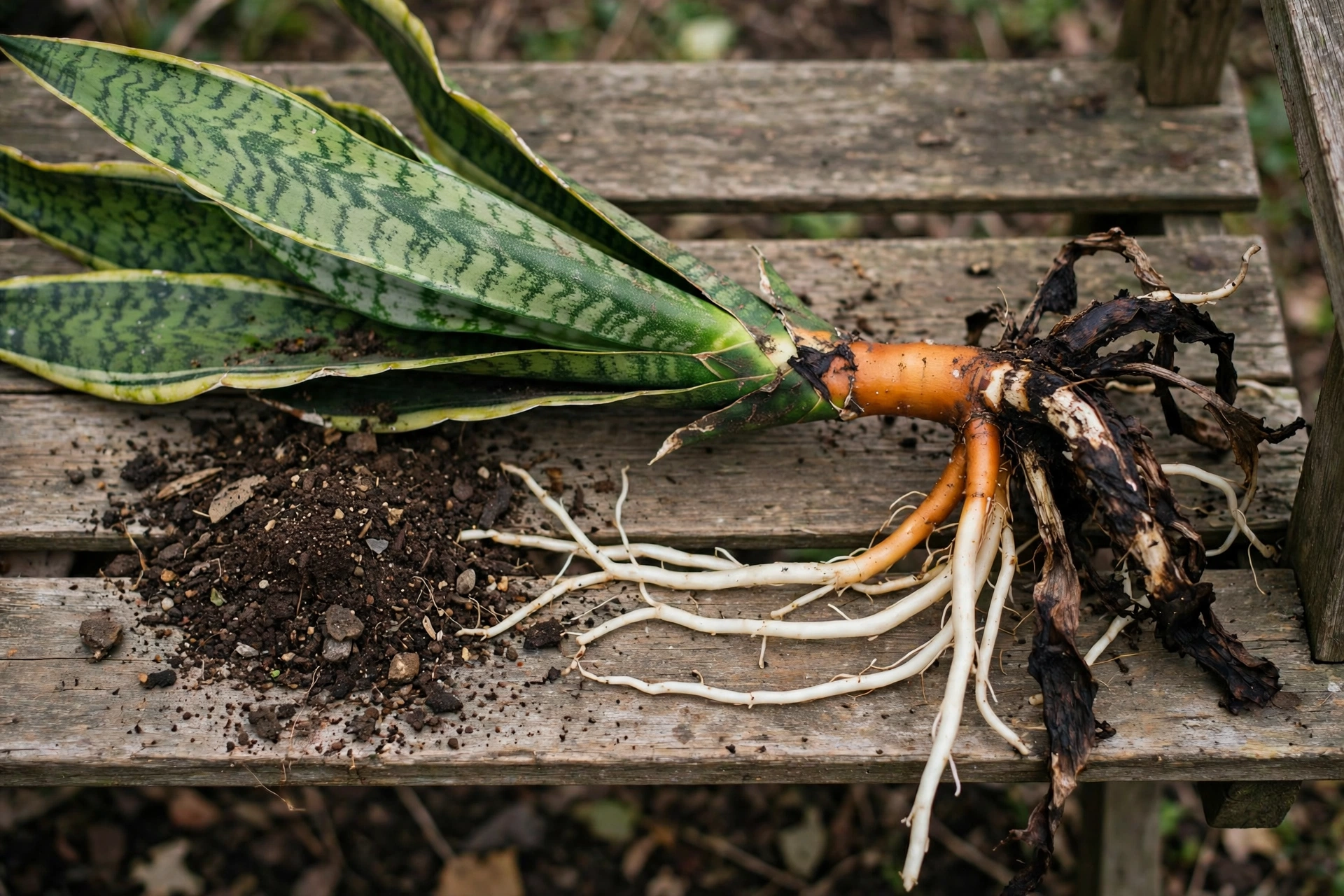
Snake plants store water in their thick leaves and rhizomes and are built for drought; their roots, kept wet, suffocate and rot, and the rot climbs into the leaf bases. A leaf whose base has rotted has literally lost its foundation — it folds over because there is nothing sound left holding it up. Our snake plant care guide names overwatering the number one killer of this species, and drooping is its most visible symptom.
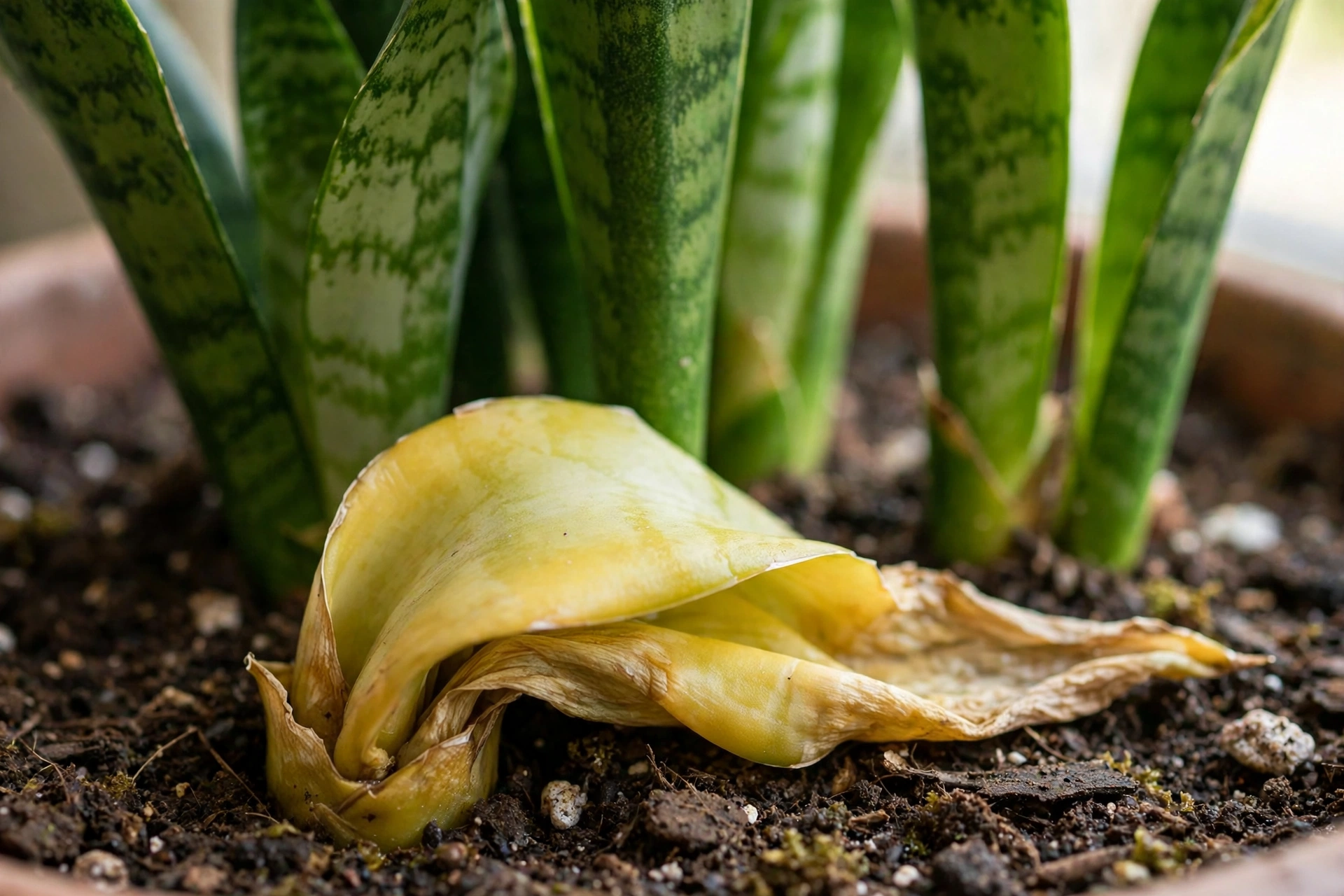
The tell: soft or mushy leaf bases; leaves yellowing from the bottom up; soil that stays wet, smells sour, or grows fungus gnats; leaves that come away from the plant with a gentle tug.
The fix: this is the rescue, and it does not wait. Unpot the plant, cut away every black or mushy root and every leaf with a rotted base, let the cuts dry a day, and repot into fresh gritty mix — the full step-by-step is the root-rot rescue in our snake plant care guide. Leaves with rotted bases never recover; leaves that are firm may stand again once their roots can work.
Cause 2: Underwatering — the rare dry droop
It exists, but it takes real neglect: weeks of bone-dry soil, usually over a holiday or a forgotten corner. A drought-stressed snake plant spends the water stored in its leaves, and they tell the story before they fall.
The tell: leaves thinner than they were, wrinkled lengthwise or curling inward at the edges, pale and dull; the pot strikingly light; soil dry to the bottom and pulling from the pot’s edge. Bases stay FIRM — that is the difference from Cause 1.
The fix: one deep watering until it runs from the drainage holes (if the mix has gone hydrophobic, soak the pot in a tray for 20–30 minutes). Leaves plump back over two to four days. Then resume the rhythm from the care guide: water only when the soil is dry all the way through.
Cause 3: Low light — leaves too weak to stand
This is the quiet one. A snake plant tolerates low light, but a leaf grown in dim conditions grows long, thin, and soft — and a leaf built without enough light cannot hold itself upright forever. It leans toward the window, then flops. Nothing is rotten; the leaf is simply underbuilt.
The tell: tall, narrow, pale leaves; the lean is toward the light; bases firm; soil habits fine. Often the whole plant looks stretched rather than sick.
The fix: bright, indirect light, reached gradually. Be honest about the existing leaves, though: a leaf grown weak stays weak — stake the worst leaners or prune them at the base, and judge the fix by the new leaves, which come in shorter, thicker, and self-supporting. Rotate the pot a quarter turn weekly so growth stays even.
Cause 4: Cold damage
Snake plants are tropical Africans; below about 50°F the tissue is injured, and a plant pressed against a cold winter window or sitting in an icy draft can take damage on the exposed side that shows up as collapse days later.
The tell: drooping that follows a cold snap or a move to a colder spot; damaged leaves look water-soaked or translucent before they fall; the pattern is one-sided, facing the glass or the vent.
The fix: move it somewhere warm and steady (60–85°F is its comfort zone), and wait. Cold-killed tissue does not recover — remove leaves that turn fully mushy — but a plant whose rhizome stayed warm will push new leaves in spring.
Cause 5: A pot too big and soil too heavy
An oversized pot is an overwatering machine: a volume of soil the roots cannot reach stays wet for weeks after every watering, and the plant lives with permanently damp feet even under a careful owner. Dense, peaty soil does the same thing in a pot of any size.
The tell: the soil surface dries but the depths stay wet for a week or more; the pot is dramatically wider than the plant; decline is slow and general rather than sudden.
The fix: repot snug — a pot only 1–2 inches wider than the root ball — into a gritty cactus-and-succulent style mix with drainage holes. Terracotta helps: it breathes and adds the weight a top-heavy plant needs.
Cause 6: Tall leaves, old leaves, and honest physics
Not every lean is a disease. Very tall leaves — ‘Laurentii’ can pass 3 feet — eventually flex and lean under their own leverage, especially in a shallow or lightweight pot. The oldest outer leaves also retire: they soften, lean outward, and yellow slowly while the center stays vigorous.
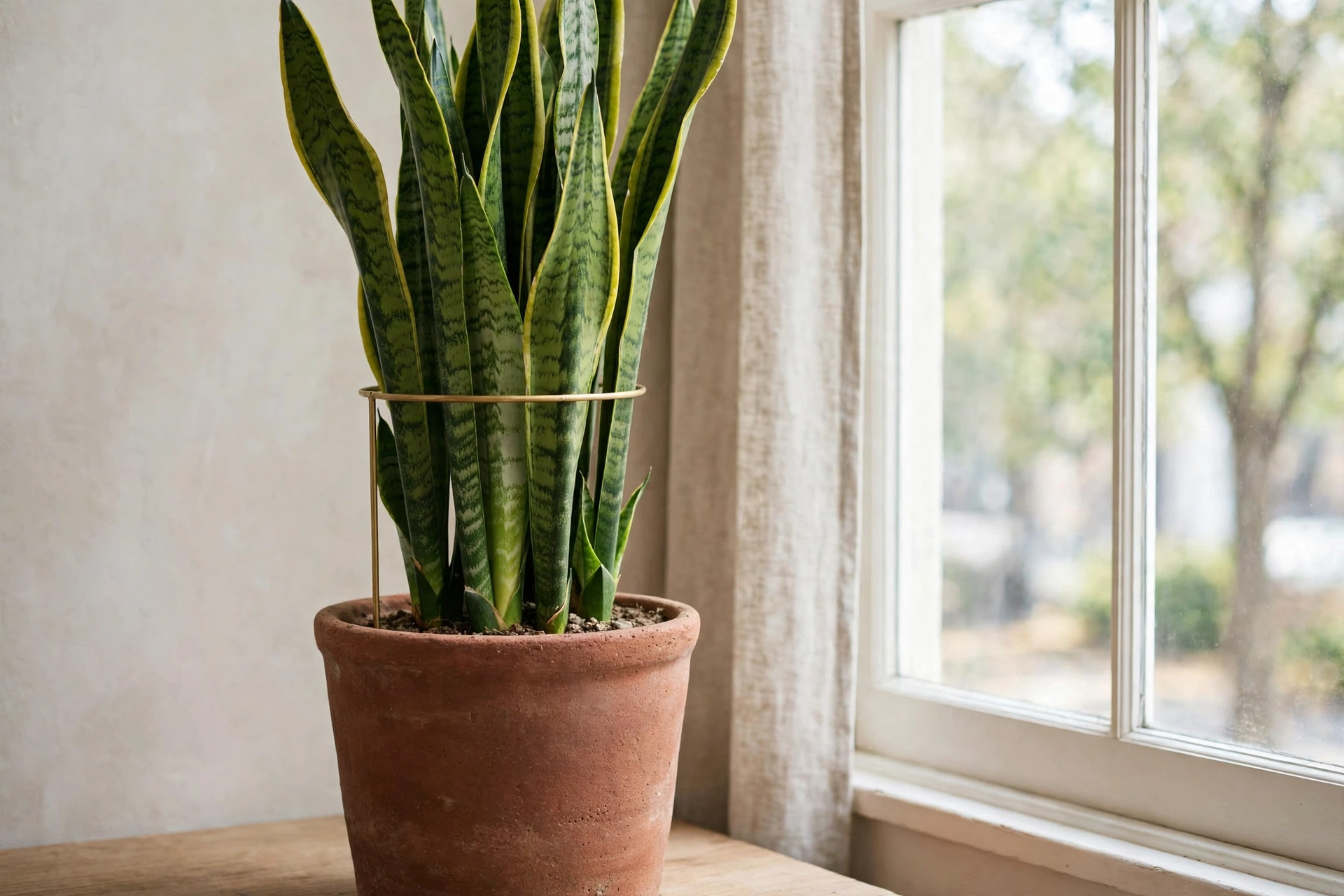
The tell: one or two outer or very tall leaves leaning; everything else firm, upright, and growing; bases solid.
The fix: support before surgery. A deeper, heavier pot, a discreet stake or leaf ring, or grouping the plant where a wall takes the lean. Prune a leaf that has creased at the base — a creased leaf never straightens — cutting it cleanly at the soil line. And good news: every healthy leaf you cut is a propagation candidate; the care guide’s propagation section turns prunings into new plants.
Keeping the leaves standing
- Water only when the soil is dry all the way through — for this species, thirst is a rumor and wet is the killer.
- Bright, indirect light builds leaves that can hold themselves up.
- Snug pot, gritty mix, drainage holes: the three-part foundation.
- Keep it out of cold drafts and off cold winter glass.
- Read the bases monthly: one firm squeeze tells you more than a watering calendar ever will.
The North Carolina State Extension plant profile for Dracaena trifasciata confirms the same care basics this guide is built on: well-drained soil, careful watering, and damage once temperatures drop below 50°F.
Snake plant drooping questions, answered
Can a drooping snake plant recover?
Yes — if the rhizome and enough roots are still firm. Rescued from rot and repotted, a snake plant pushes new upright leaves from the center within weeks to a couple of months. Judge recovery by new growth and firm bases, not by leaves that already folded: a leaf with a rotted or creased base will not stand again, and removing it costs the plant nothing.
Should I water my snake plant if it is drooping?
Only if the 60-second check says the soil is dry all the way down AND the leaf bases are firm. If the soil is wet or a base is soft, water is the one thing that makes it worse — unpot and inspect instead. Drooping in this species is a drowning signal far more often than a thirst signal.
Why is my snake plant drooping after repotting?
Usually transplant stress plus a watering mistake: roots disturbed, then watered generously “to settle in,” into fresh mix that holds more moisture than the old. Keep a freshly repotted snake plant on the dry side, in bright indirect light, and give it two to three weeks — most steady themselves. If bases soften during that window, treat it as Cause 1, not stress.
Can I stake a drooping snake plant?
You can, and for tall, healthy-but-leaning leaves it is the right fix: a stake, a plant ring, or a taller cachepot that supports the lower third of the leaves. Staking works for physics problems (Cause 6) and weak growth while new leaves come in (Cause 3). It does nothing for rot — never stake a leaf with a soft base; remove that one.
Why are only the outer leaves of my snake plant falling over?
That is the retirement pattern: the oldest leaves, on the outside of the rosette, finish first, especially on a plant carrying very tall foliage. If the center is firm and growing, prune the retirees at the base and carry on. Worry when the fall reaches the young center leaves — that pattern points back to the roots.
How long does it take a rescued snake plant to stand up again?
Firm-but-flopped leaves may firm up within days of correct water and light. A rot rescue is slower: expect the first new upright leaf from the rhizome in roughly four to eight weeks in the growing season. This is a slow plant being saved, not a fast plant being cured — patience is part of the treatment.



One Comment