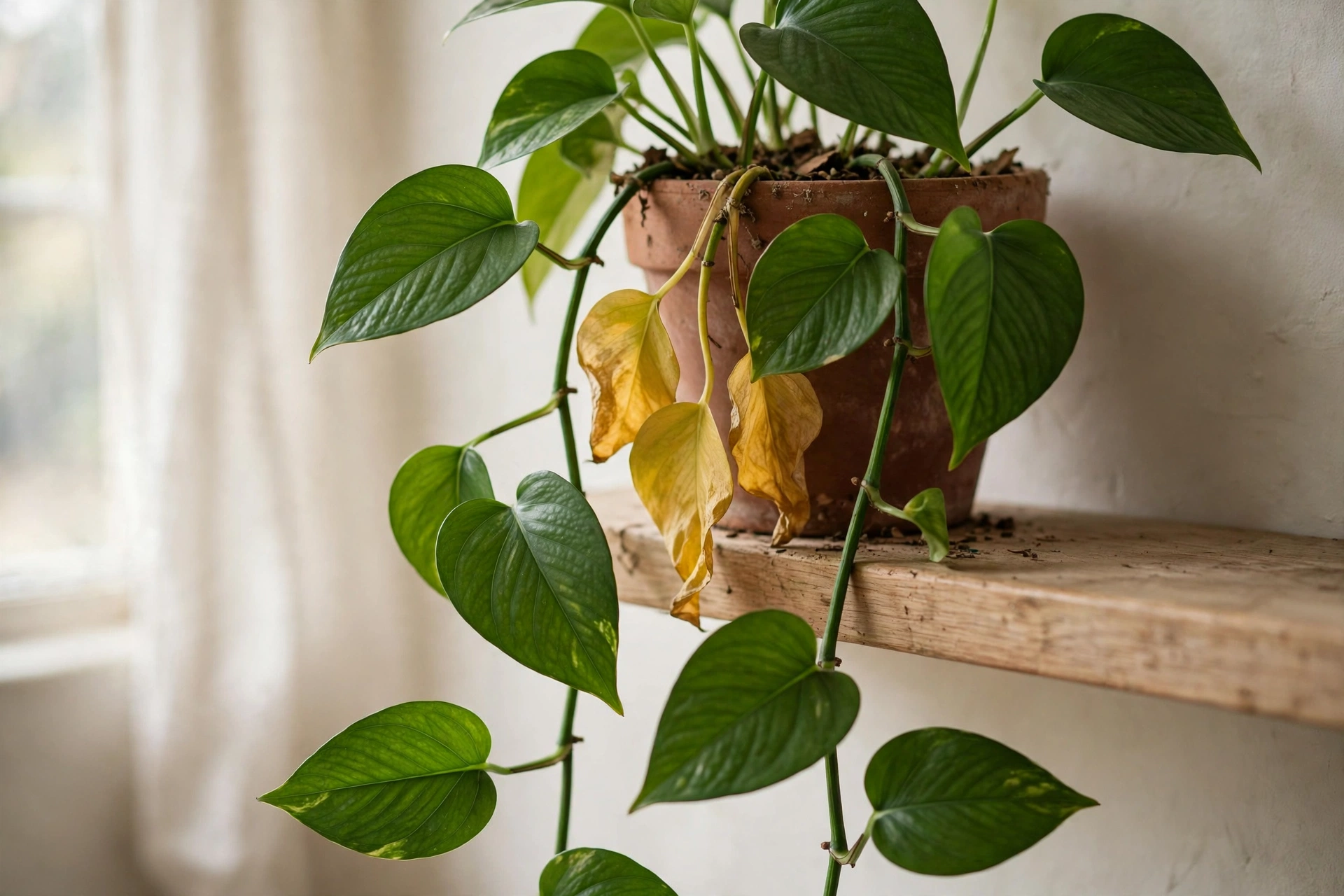
Why Is My Pothos Turning Yellow? Causes & Fixes
It starts with one leaf. You pick it off and think nothing of it. Then there are two more by the weekend, and one whole section of vine is fading from green to a tired, translucent yellow — and now you are standing over the plant at midnight, phone in hand, wondering if it is dying and whether it is your fault.
Take a breath. Pothos leaves turning yellow is a symptom, not a death sentence, and the plant is remarkably specific about what it means — if you read the yellowing in the right order. One cause is responsible for most cases by a wide margin, and it is the opposite of what most owners guess. This guide walks the causes in the order you should check them, starting with a two-minute test that settles half of all cases on the spot.
Quick Answer
Nine times out of ten, pothos leaves turning yellow means the soil has stayed too wet — overwatering, sliding toward root rot. Check the soil first: if it is wet and the yellowing leaves feel soft, stop watering, and follow the rescue below. The other causes — thirst, low light, simple old age, an empty stomach, a cramped pot — each has its own tell, and this guide reads them in order.
Table of Contents
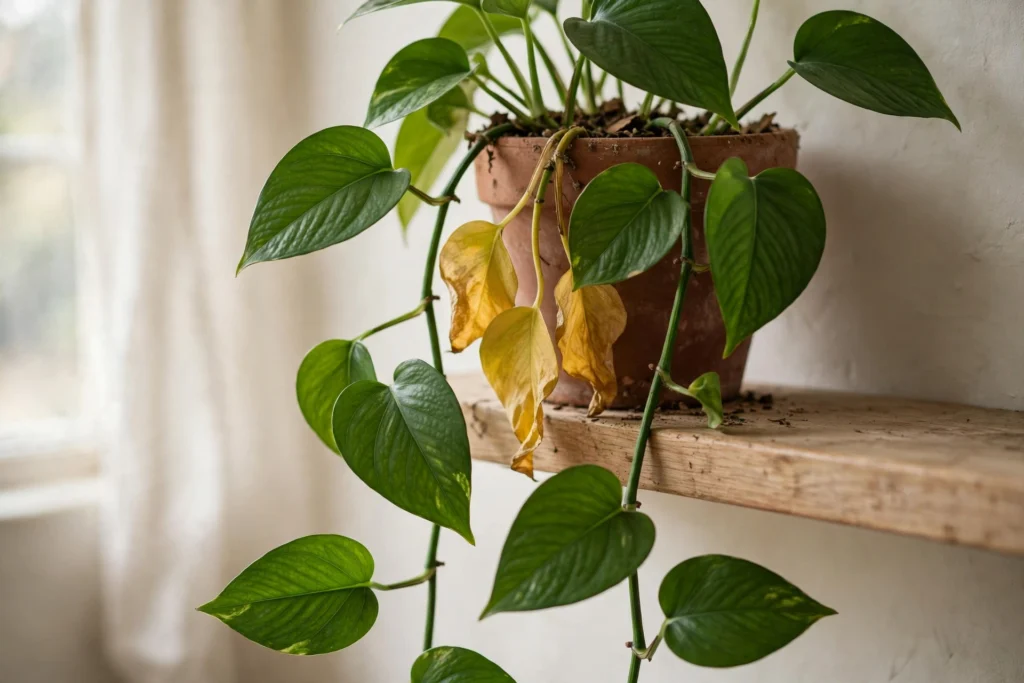
The 2-minute check: read the soil before you read the leaves
Do not diagnose from the leaves alone — the same yellow comes from too much water and too little. The soil tells you which world you are in.
- Push a finger (or a wooden chopstick) 2 inches into the mix. Wet and dark, with soil sticking to it? Your problem lives in the “too wet” column. Dry and crumbly all the way down? Read the thirst cause first.
- Look at which leaves are yellow. Oldest leaves near the soil, one or two at a time, while the vine tips stay green and growing — often harmless age. Many leaves at once, anywhere on the plant — a care cause, keep reading.
- Feel a yellow leaf. Soft and limp points to wet roots. Thin, dry, and crispy points the other way.
Now walk the causes in order. Stop when the description matches your plant exactly.
Cause 1: Overwatering — the usual suspect
Pothos roots suffocate in soil that never dries. Starved of oxygen, they stop working, then start rotting — and a plant whose roots cannot deliver water yellows its leaves even while sitting in a wet pot, which is why this cause confuses everyone. Penn State Extension’s pothos guidance is the prevention and the diagnosis in one line: the mix should dry out somewhat between waterings.
The tell: soil wet or soggy days after watering; yellow leaves soft and limp; yellowing worst on the lower and older leaves but spreading; sometimes a sour smell from the pot, or stems soft at the base. If several of these match, treat it as early root rot, not a watering-schedule slip.
The fix: Stop watering and let the mix dry properly. If the pot stays wet, take the plant out and look at the roots — healthy pothos roots are firm and white to light tan; rotted ones are brown or black, mushy, and smell sour. Rot that has started needs the full rescue (below), not just patience.
Cause 2: Underwatering — the dry yellow
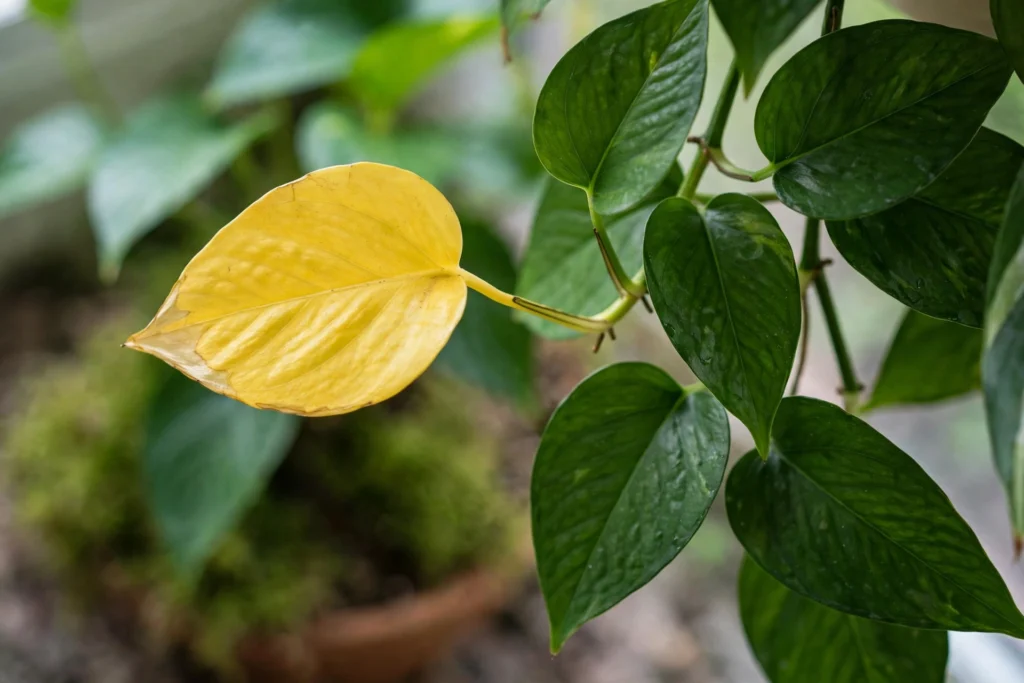
A pothos forgotten for weeks yellows too — UF/IFAS guidance notes a too-dry mix causes yellowing, and anyone who has seen a drought-stressed vine knows the look.
The tell: soil bone-dry and pulling away from the pot’s edge; the whole plant drooped; yellow leaves thin and papery, often with crispy brown edges; the pot feels suspiciously light when you lift it.
The fix: Water deeply until it runs from the drainage holes, let it drain, and resume a rhythm — for most homes, checking weekly and watering when the top 1–2 inches are dry. Leaves that have gone fully yellow will not recover, but the vine will push fresh green growth from its nodes within weeks.
Cause 3: Not enough light (and its opposite)
A pothos tolerates low light, but tolerance is not enthusiasm. In a dim spot, growth slows, leaves come in smaller and plainer, and the plant sheds older leaves it cannot afford — a slow, pale yellowing from the inside of the plant outward. Too much direct sun does the reverse damage: bleached, yellow-white patches on the leaves facing the glass, scorched where the sun sat.
The tell: low light = pale new growth, long bare stretches of vine, yellowing oldest leaves. Sun = yellow patches only on the window side, on the most exposed leaves.
The fix: bright, indirect light — the pothos in our care guide’s light section is the reference. Move a dim plant brighter over a few days; move a scorched one back from the glass. Variegated types whose cream markings are yellowing and greening over are usually reverting for want of light — brighter conditions are the answer for them too.
Cause 4: Simple old age — the one that is not a problem
The Spruce’s pothos guidance carries the sentence every owner needs: it is normal for a pothos to develop yellow leaves with age. A long vine continuously retires its oldest leaves — the ones nearest the pot, which have been working the longest — while the growing tip stays green and busy.
The tell: exactly one or two yellow leaves at a time, always among the oldest, on a plant that is otherwise growing, rooting, and looking pleased with itself. No wet soil, no spread, no drama.
The fix: none. Pick off the spent leaf once it is fully yellow (see the cutting question in the FAQs before you reach for scissors early) and let the plant continue.
Cause 5: An empty stomach — nutrient shortfall
A pothos that has lived in the same pot of soil for a year or more slowly eats everything the mix came with. Nitrogen is the nutrient that shows first, because the plant can move it: it strips nitrogen from its oldest leaves to feed new growth, and the donors yellow evenly while the tips stay green.
The tell: fairly uniform yellowing across the older leaves, new growth still green but slowing; the plant has not been fed in many months, or has never been repotted.
The fix: a balanced liquid feed at half strength, once a month through spring and summer, per the feeding rhythm in our pothos care guide — and fresh mix at the next repotting. Feed a plant that is growing; pouring fertilizer on a plant in winter rest or in active root rot solves neither.
Cause 6: A pot it has outgrown
Roots wound in tight circles cannot drink efficiently even from wet soil, and a rootbound pothos dries out within days of every watering, living in a permanent cycle of drought spikes.
The tell: roots circling the drainage hole or matting the surface; water runs straight through the pot; yellowing scattered through the plant despite a decent watering rhythm.
The fix: repot one size up in spring or summer, teasing the root ball open and refreshing the mix — the repotting steps in our pothos care guide walk through it.
Cause 7: Cold, drafts, and the small print
Less common, worth a glance: a pothos pressed against cold winter glass or sitting in an air-conditioning draft can yellow and drop leaves on the exposed side; sap-sucking pests (mealybugs in the leaf joints, scale along the stems) drain leaves into a mottled yellow — check the joints and undersides if the yellowing looks spotty rather than even; and bacterial leaf spot shows as yellow halos around brown spots, a wet-soil disease. None of these is the first suspect, but if causes 1–6 do not match, they are where to look next.
The root-rot rescue, step by step
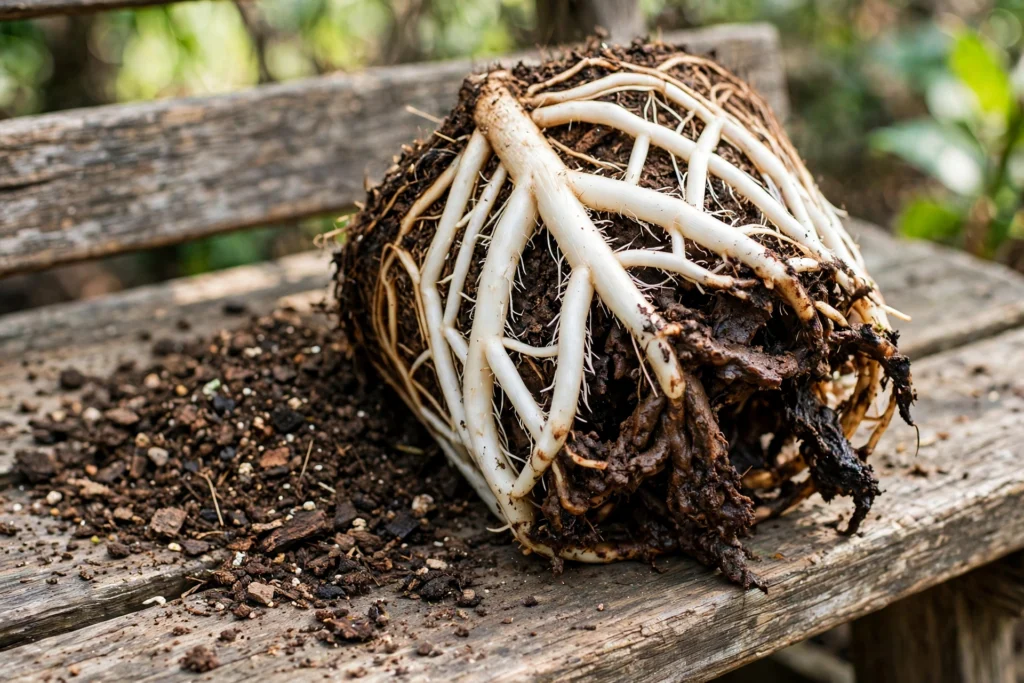
If Cause 1 matched and the roots are involved, here is the intervention that actually saves the plant:
- Unpot and rinse. Tip the plant out and wash the soil from the roots so you can see everything.
- Cut away the rot. With a clean blade, remove every root that is brown or black, soft, or stringy, cutting back to firm white tissue. Remove stems that are soft at the base, and leaves already fully yellow.
- Repot fresh. New or washed pot, fresh free-draining mix, the plant at its old depth. Do not reuse the old soil.
- Water once, lightly, then wait. The rescued roots need air more than water; resume the dry-between-waterings rhythm immediately.
- Take insurance cuttings. While you work, snip a few healthy stem sections — each with a node — and stand them in water. Pothos roots so willingly that even if the mother plant fails, her cuttings carry on. It is the one advantage this plant hands you in a crisis; take it.
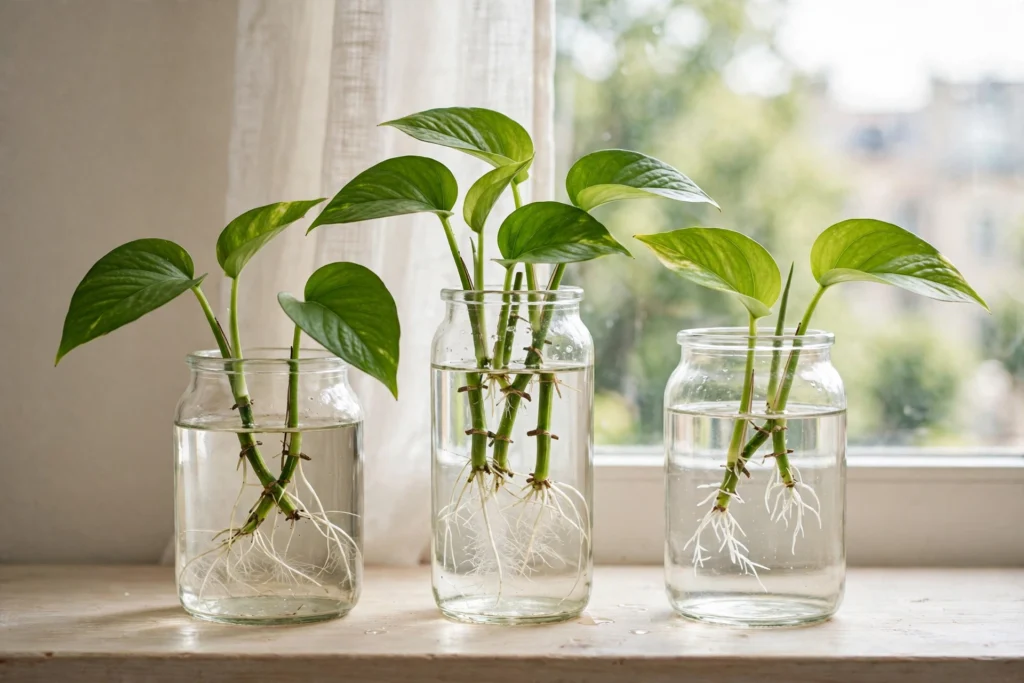
Judge the rescue over the following month by new growth from the nodes, not by the leaves it already lost.
Keeping yellow leaves from coming back
- Water when the top 1–2 inches of soil are dry — the finger test, not a weekday.
- Pot with drainage holes, always; empty the saucer after watering.
- Bright, indirect light: the single setting that prevents the most causes at once.
- Feed lightly in the growing season; refresh the mix every year or two.
- Expect and allow the occasional oldest leaf to retire. A pothos with zero yellow leaves ever is not the goal — a pothos whose yellowing you can explain is.
Pothos yellow-leaf questions, answered
Will a yellow pothos leaf turn green again?
No. Once a leaf has yellowed, the plant has withdrawn what it wants from it — chlorophyll does not come back. The leaf may linger, but it is finished; your job is to fix the cause so the next leaves come in green. Judge every fix by new growth, never by the yellow leaves already there.
Should I cut yellow leaves off my pothos?
Cut them once they are fully yellow — The Spruce’s guidance — because until then the leaf is still feeding the plant a little, and the plant is still reclaiming nutrients from it. A half-yellow leaf on a plant you have just rescued is doing work. A fully yellow one is litter; snip it at its stalk with clean scissors.
How fast does yellowing spread if it is root rot?
Days to a couple of weeks, moving from the oldest leaves outward and up the vine, with more leaves joining rather than the same one worsening. That pace is itself a clue: age yellowing retires a leaf at a time over months. Rot takes the plant in a procession. If it is marching, unpot and look at the roots today.
One yellow leaf — should I worry?
Almost never. A single oldest leaf yellowing on a growing plant is the retirement described in Cause 4. Worry when there are several at once, when new growth yellows, when the soil smells sour, or when stems feel soft at the base. Pattern and pace, not the color of one leaf, are the diagnosis.
My pothos turned yellow right after repotting. What happened?
Usually transplant stress: roots disturbed, rhythm interrupted, sometimes a few days too wet in the new mix while the roots re-establish. Keep the light indirect, the mix on the drier side of moist, and resist compensating with extra water and feed — most plants steady themselves within two or three weeks and resume growing.
The stems have gone bare where leaves yellowed and fell. Will they regrow there?
Leaves do not regrow from the same bare nodes on a pothos vine — bare sections stay bare. The cosmetic fix is the grower’s classic: prune the vine back (each cutting roots into a new plant), and pin or plant rooted cuttings back into the crown of the pot to restore the fullness. Our pothos care guide’s fullness trick is built on exactly this.
Can yellow leaves spread to my other plants?
Yellow leaves themselves are not contagious. Two exceptions share pots and shelves, though: pests like mealybugs walk to neighboring plants happily, and the water molds behind root rot travel in shared saucers and reused soil. Fix the cause, quarantine a pest case, and never recycle the soil from a rotted plant.



2 Comments