Why Is My Peace Lily Drooping?
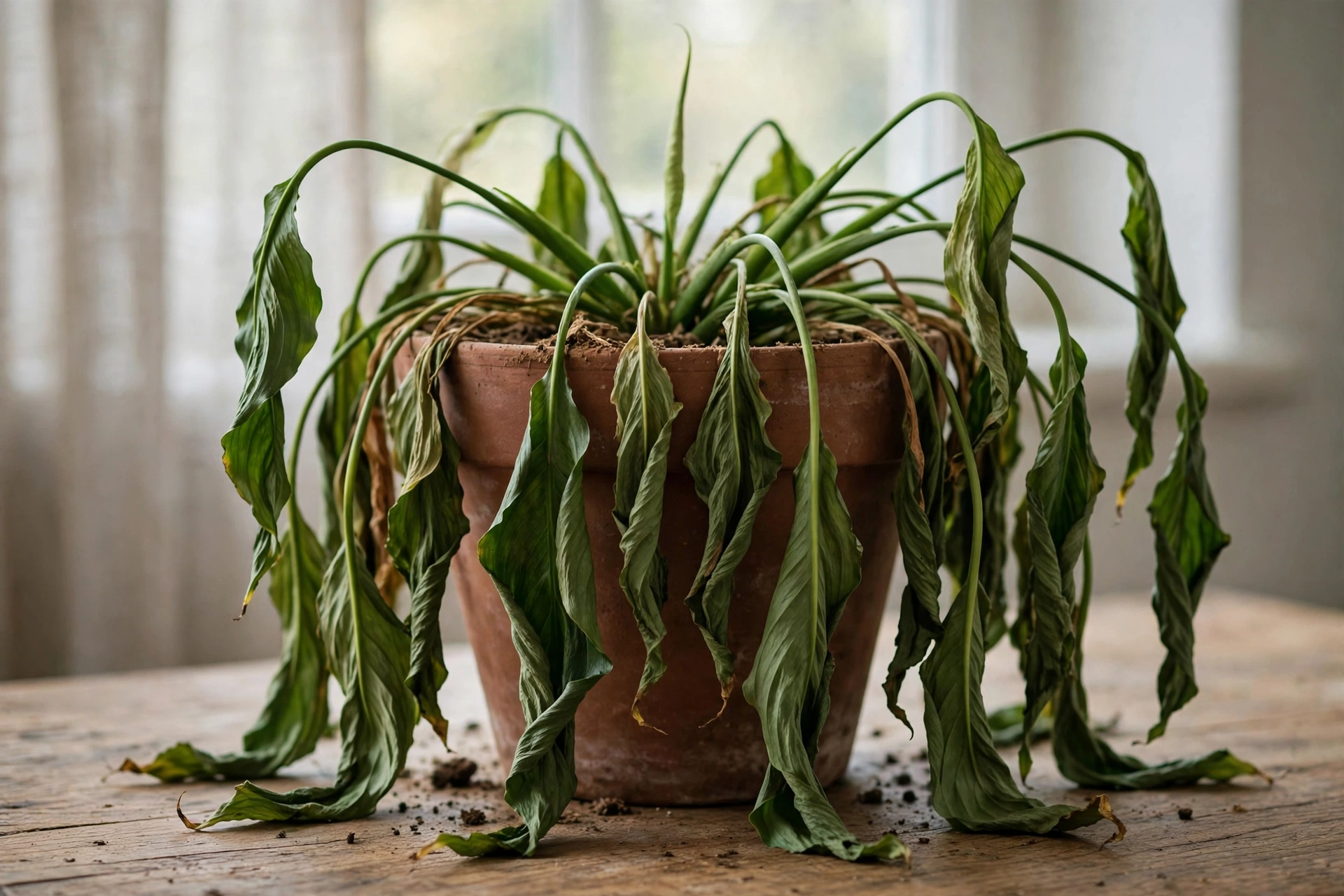
No houseplant faints like a peace lily. One morning it stands glossy and upright; by afternoon the whole plant has collapsed over the edge of its pot like it has given up on life. New owners panic — and then make the classic mistake: they assume every droop means thirst, and water a plant that may already be drowning.
Because peace lily drooping has two main causes that look identical and need opposite treatments. One is thirst, and it is fixed with water within hours. The other is root rot in wet soil, and watering it is the worst thing you can do. Thirty seconds of checking separates them. This guide starts with that check, then works through the causes in order.
Quick Answer
Peace lily drooping means check the soil before anything else. Pot light and soil dry? It is thirst — soak it, and it will usually stand back up within hours. Pot heavy and soil wet while the plant droops? That is the dangerous one: roots failing in wet soil, and it needs unpotting and inspection, not another drink. Everything else — tight pot, cold draft, recent repotting — is a distant second to those two.
Quick diagnosis — match the tell to the cause:
| What you see | Likely cause | First fix |
|---|---|---|
| Whole plant collapsed, soil dry, pot feels light | Thirst | Soak it; recovery starts within hours |
| Drooping while the soil is still wet | Overwatering and root rot | Unpot now; trim rot; repot in fresh mix |
| Faints again a few days after every watering | Rootbound | Repot one size up |
| Drooped after a cold night or near a heater vent | Temperature stress | Move to a steady 65–80°F spot |
| Drooped right after repotting or dividing | Transplant shock | Shade and steady moisture while it settles |
| Only the white flower is drooping; leaves are fine | Normal flower aging | Snip off the spent flower |
Table of Contents
The 30-second check: lift the pot, test the soil
- Lift the pot. Noticeably light means the root ball is dry. Surprisingly heavy means it is holding water. Pot weight is the fastest truth a peace lily tells.
- Push a finger 1–2 inches into the soil. Dry at that depth confirms the thirst world. Cool and wet days after the last watering puts you in the rot world.
- Feel a drooping leaf. Thirsty leaves stay fairly firm and papery as they fold — the structure is intact, the water pressure is gone. Rot-world leaves feel soft and limp, and lower leaves often yellow at the same time.
Dry + light + firm leaves → Cause 1. Wet + heavy + soft leaves → Cause 2. Neither pattern cleanly → Causes 3–6.
Cause 1: Thirst — the famous faint
Peace lilies run on water pressure: their leaf stems have no woody strength, so the moment the roots cannot supply enough water, the whole plant folds. That makes this species an early, dramatic warner — it faints at a dryness level other plants would shrug at — and it also makes the recovery spectacular: a thirst-fainted peace lily is usually standing again the same day.
The tell: the full check says dry: light pot, soil dry an inch or two down, leaves firm as they fold. Often the whole collapse happened fast, over a warm day or after a missed watering.
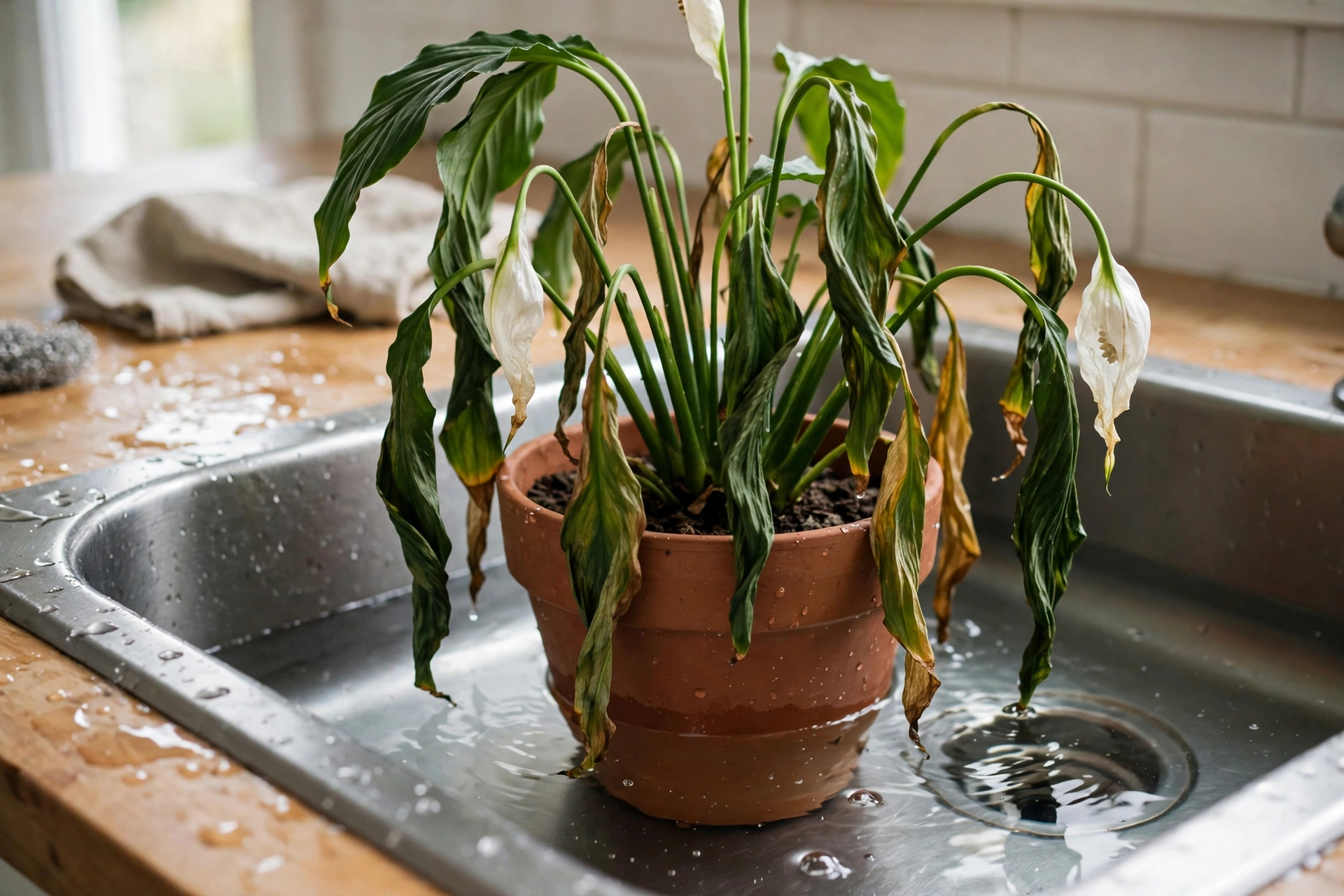
The fix: soak, don’t sprinkle. Water thoroughly until it runs from the drainage holes — or, if the soil has dried hard and shrunk from the pot’s edge so water runs straight down the gap, stand the pot in a sink with a few inches of tepid water for 20–30 minutes and let it drink from below. Drain fully. Recovery starts within a couple of hours and completes by the next morning. Then change the rhythm so it stops happening: as our peace lily care guide puts it, the droop is a backup alarm, not a watering schedule — learn to water just before the faint, when the top inch dries, because repeated collapse-and-revival cycles genuinely stress the plant.
Cause 2: Overwatering and root rot — drooping in wet soil
This is the diagnosis that matters most, because it wears the same costume as thirst. Roots kept constantly wet suffocate and rot; a plant with rotting roots cannot move water to its leaves even while standing in it — so it wilts in wet soil, and every well-meant watering pushes it further down.
The tell: the check says wet: heavy pot, soil still wet days after watering, soft limp leaves, yellowing lower leaves, sometimes a sour smell from the pot or fungus gnats hovering.
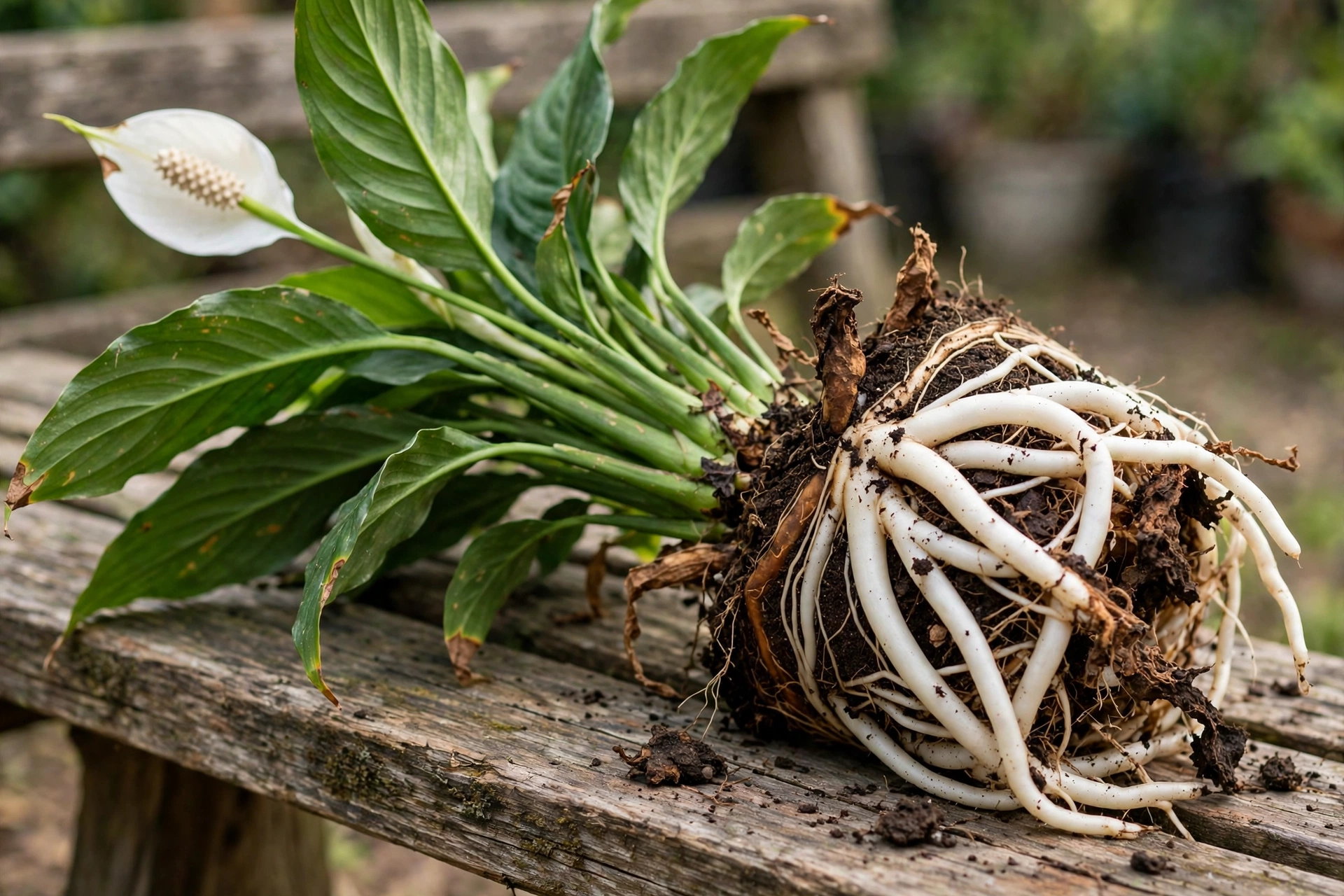
The fix: unpot it today. Shake off the old mix, cut away every brown or mushy root with clean scissors (healthy peace lily roots are white and firm), and repot into fresh, airy mix in a pot with drainage. Water lightly to settle, then resume the top-inch rhythm. Expect recovery in days to a couple of weeks, judged by new growth and firming stems — leaves that yellowed will not come back, and removing them is fine.
Cause 3: Rootbound — the faint that keeps repeating
A peace lily that droops again every few days, recovers fully each time you water, and repeats the cycle faster and faster is not being dramatic — it is telling you the pot is now mostly roots. Little soil means little water storage, so the plant runs dry between waterings no matter how faithful you are.
The tell: the repeating cycle; water running through quickly; roots through the drainage holes or circling at the surface; watering that used to last a week now lasting two days.
The fix: repot one size up (1–2 inches wider) — spring is ideal — following the repotting steps in the care guide. Peace lilies like being slightly snug, so size up one step, not three: an oversized pot swings you toward Cause 2.
Cause 4: Temperature — cold drafts and heat blasts
A peace lily is a tropical understory plant happiest around 65–80°F, and it protests at both ends. A cold draft — an air-conditioning vent, a winter window it presses against — can collapse leaves on the exposed side almost overnight. A heat blast from a radiator or a hot sunny sill makes it flag at midday by out-drinking its supply.
The tell: the droop followed a cold night, a move, or a heat wave; damage is one-sided, facing the vent, glass, or radiator; the soil check comes back normal.
The fix: move it to steady, moderate warmth out of drafts, water normally, and wait. Leaves killed by cold turn yellow or black and do not recover — cut them — but the crown usually pushes fresh growth once conditions settle.
Cause 5: Transplant and division shock
Peace lilies sulk after disturbance. A plant repotted or divided in the last week or two commonly droops even with perfect watering, because damaged and re-settling roots cannot yet supply the full canopy.
The tell: the timing — drooping that began right after repotting, dividing, or a move to a new home — with a soil check that reads normal.
The fix: patience and gentleness. Keep the soil evenly moist (not wet), the plant in bright indirect light, and leave it alone for a week or two. Most recover fully as roots re-establish. If it worsens after two weeks, or stems go soft at the base, re-check for Cause 2 instead.
Cause 6: Only the flower is drooping — that one is normal
Sometimes the “drooping peace lily” is a perfectly healthy plant whose white flower is bending, browning, or turning green. That is not a symptom: the spathe is a temporary structure that ages over weeks, typically greening and then browning as it finishes. The leaves staying upright and firm is the giveaway that nothing is wrong.
The fix: none needed. Cut the finished flower stem at its base for tidiness, and keep the care steady — the light guidance in the care guide is what brings the next bloom.
Stopping the faint cycle
- Water on the top-inch test, plus the pot-weight habit: lift every time you pass, and a light pot never surprises you.
- Always drain: no standing water in saucers or cover pots, ever.
- Pot up one size when the faint cycle shortens to a few days.
- Steady 65–80°F, out of drafts, vents, and radiator blast.
- Treat a wet-soil droop as an emergency, not a thirst — that single habit saves more peace lilies than any other.
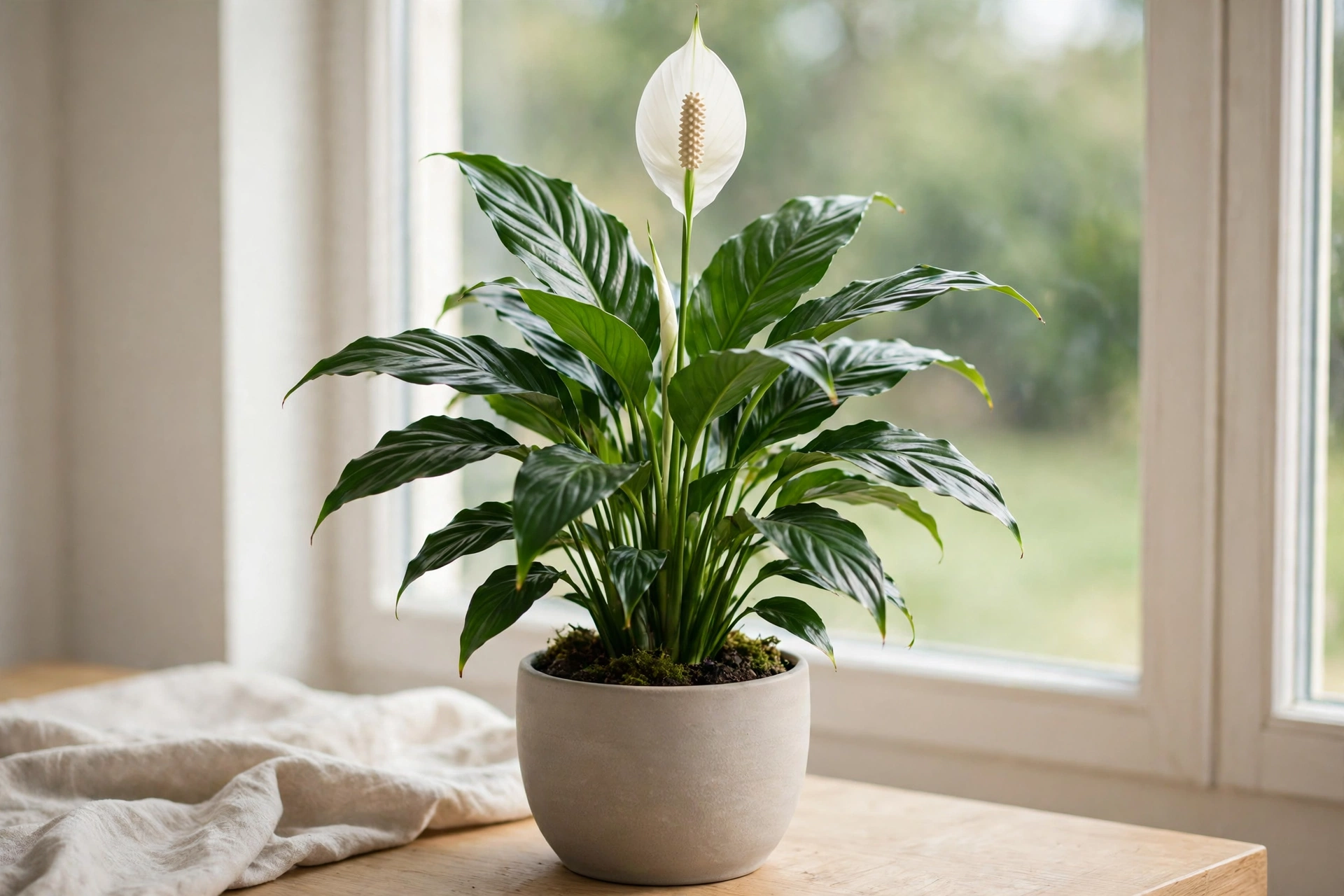
North Carolina State Extension’s peace lily profile describes the same comfort zone this guide works in — warm conditions, shade rather than direct sun, and steady moisture.
Peace lily drooping questions, answered
How long does a drooping peace lily take to recover after watering?
If thirst was the cause, remarkably fast: leaves begin lifting within one to four hours of a proper soak, and the plant is usually fully upright by the next morning. If a full day passes after thorough watering with no improvement, thirst was not the cause — go back to the check and look at the roots.
Why does my peace lily droop again every few days?
Because it is running out of storage. A rootbound plant in a small pot drinks its soil dry in days, faints, recovers when watered, and repeats. The shortening cycle is the classic sign it is time to pot up one size. The other repeating-cycle cause is position: a plant in a bright, warm spot simply uses water faster than a shaded one.
My peace lily is drooping but the soil is wet. What do I do?
Do not water — that combination is the rot pattern. Empty any standing water, let the top couple of inches dry, and if the droop persists or worsens over three to five days, unpot and inspect the roots. Cut away anything brown and mushy, repot into fresh airy mix, and water lightly. A wet-soil droop is the one peace lily symptom that should never wait a week.
Can a peace lily die from drooping once?
From a single thirst faint, almost never — this species’ party trick is collapsing completely and standing up the same day. What harms it is the pattern: repeated faint-and-soak cycles stress it over time, and a droop caused by root rot, left untreated, can kill it. The droop itself is a message; it is ignoring the message that does the damage.
Should I mist my drooping peace lily?
Misting will not revive it. A thirst droop is about water at the roots, not humidity at the leaves, and misting a rot-world plant adds moisture where it is least wanted. Soak the root ball for thirst, inspect the roots for rot, and use a humidifier — not a spray bottle — if your room air is very dry.
Why is my peace lily drooping after repotting?
Transplant shock: disturbed roots temporarily cannot keep up with the leaves’ demand, so the plant folds even in correctly moist soil. Keep it evenly moist, in bright indirect light, and give it one to two weeks. Most peace lilies re-stand on their own; division wounds make recovery a little slower. Softening stem bases or a sour smell mean it has tipped into rot instead — then follow Cause 2.



One Comment