
Snake Plant Care Guide: Light, Water, Soil & Fixes
The snake plant is sold as the houseplant you cannot kill — and then, a few months later, its leaves turn yellow, go soft at the base, and topple over like felled trees. Almost nobody kills one by forgetting it. People kill it by caring too much: a splash of water here, a top-up there, until the roots quietly rot in soil that never dries.
Here is the honest truth about this plant. Good snake plant care is mostly restraint — the less often you water it, the better it does. This guide covers the light it actually grows in (not just survives), the watering rule that keeps it alive for decades, the gritty soil it wants, how to divide it, and how to rescue one that is already leaning.
Quick Answer
Give a snake plant bright, indirect light, water it only when the soil has dried out completely — pot and all — and plant it in a fast-draining, gritty mix in a pot with a drainage hole. Keep it warm (60–85°F), feed it lightly once or twice in the growing season, and then leave it alone. Overwatering causes nearly every snake plant death; neglect almost never does.
Table of Contents
Quick Care Card — Snake Plant (Dracaena trifasciata)
| Botanical name | Dracaena trifasciata (older name: Sansevieria trifasciata) |
| Light | Bright, indirect light grows it fastest; tolerates low light and a few hours of direct sun |
| Water | Only when the soil is dry all the way through — every few weeks, not on a schedule |
| Soil | Cactus or succulent mix, or potting mix cut with perlite or pumice; must drain fast |
| Temperature | 60–85°F is comfortable; damage starts below 50°F |
| Humidity | Average rooms (30–50%) are fine; no misting needed |
| Fertilizer | Light feeder — a weak feed once or twice in spring and summer, none in winter |
| Pet safety | Toxic to cats and dogs (ASPCA) — see the pet safety section below |
Light: it survives the dark corner, but it doesn’t grow there
Snake plants tolerate low light better than almost any other houseplant, and that tolerance is exactly why so many of them sit in dim corners doing nothing for years. Tolerating is not thriving. In low light a snake plant slows to a near stop: no new leaves, colors that gradually dull, and — the hidden danger — soil that stays wet far longer because the plant is barely drinking.
For actual growth, give it bright, indirect light: an east-facing windowsill, or a spot a few feet from a south or west window where the light is strong but filtered. NC State Extension notes the plant also handles two to six hours of direct sun a day, and a few hours of gentle morning sun will do it good. What it dislikes is a sudden move from a dark corner into harsh midday sun — unacclimated leaves can scorch, leaving pale, papery patches. If you are moving one to a brighter home, step it closer to the window over a week or two.
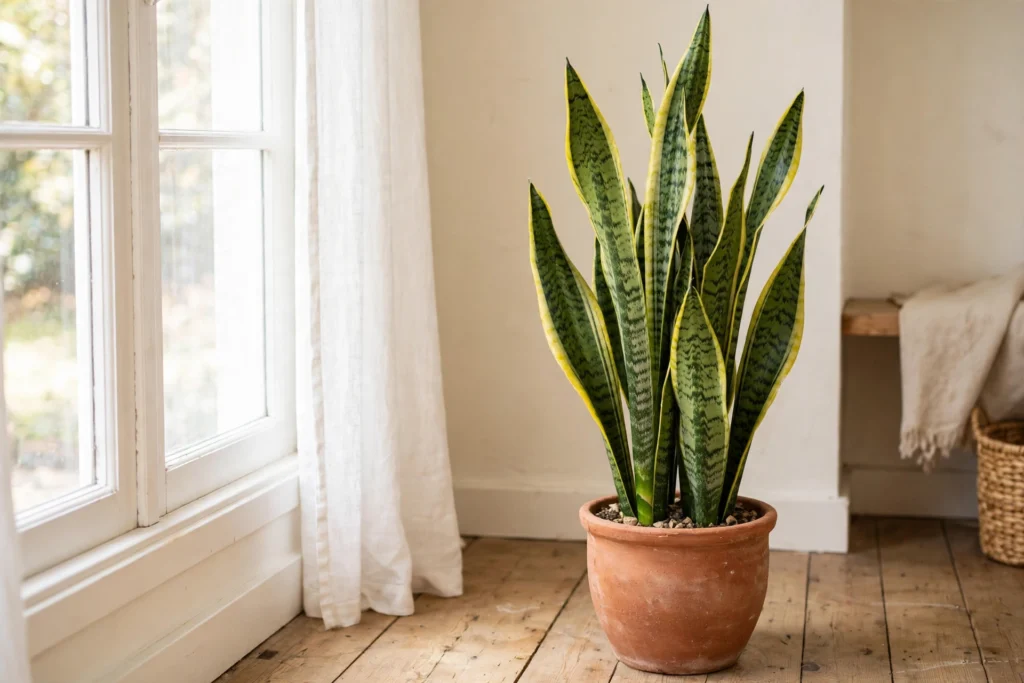
Field tip: A snake plant in good light stands to attention — leaves upright and firm. Leaves that lean, splay outward, or stretch thin are usually asking for more light, not more water.
Water: the dry-all-the-way rule
This is the whole game. A snake plant stores water in its thick leaves and in the fleshy rhizomes under the soil, and it is built for drought. Water it the way its native West African habitat would: a proper soak, then nothing for a long while.
- Check the whole pot, not the surface. The top inch dries days before the bottom does. Push a wooden chopstick or skewer to the bottom of the pot — if it comes out with damp soil clinging to it, wait. A pot that feels noticeably light when you lift it is also a reliable sign.
- Soak once, thoroughly. When the soil is dry all the way through, water slowly until it runs from the drainage hole, wetting the whole root ball.
- Empty the saucer. Never leave the pot standing in water. Ten minutes after watering, tip out whatever drained.
- Wait longer than feels right. In spring and summer, a typical home snake plant needs water every few weeks. In winter, NC State Extension’s guidance stretches to every one to two months, because growth nearly stops and the soil dries slowly.
Water at the base, aiming at the soil rather than into the crown where the leaves meet — water sitting in the center of the rosette invites rot in the newest growth. And if you take one sentence from this whole guide, take this one: a thirsty snake plant recovers in a day; a rotted one often cannot be saved at all. When in doubt, wait another week.

Soil and the pot: drainage is everything
A snake plant in dense, peat-heavy soil is a rot case waiting for its next watering. The mix should be gritty and open, so water runs through instead of lingering:
- Easiest route: a bagged cactus or succulent mix, straight from the bag.
- DIY route: 2 parts regular potting mix to 1 part perlite or pumice. The result should feel coarse, with visible grit throughout.
The pot matters as much as the mix. It must have a drainage hole — no exceptions for this plant. Terracotta is the forgiving choice: it wicks moisture through its walls, helping the soil dry evenly, and its weight keeps a tall, top-heavy plant from tipping. Keep the pot snug, too. A snake plant swimming in an oversized pot sits in a large volume of wet soil its roots cannot reach, which is precisely the rot setup you are trying to avoid.
Temperature and humidity
Snake plants are comfortable in the same range you are: 60–85°F, with the fastest growth toward the warm end. Cold is their weakness. Prolonged exposure below 50°F damages the leaves — often showing up days later as soft, dark, water-soaked patches — so keep the plant away from frosty window glass in winter and from cold drafts near doors.
Humidity needs nothing from you. Average indoor air, 30–50%, suits it perfectly, and misting is unnecessary — droplets on the leaves do this desert plant no favors. One genuinely useful habit: wipe the broad leaves with a damp cloth every month or two. Dust films over the leaf surface, and clean leaves simply photosynthesize better.
Fertilizer: a light feeder
Snake plants ask for very little food. A balanced houseplant fertilizer at half strength — or a mild cactus feed — once in spring and once in mid-summer is plenty. Some growers stretch to a weak feed every 4–6 weeks through the growing season; the plant will not complain, but it will not grow dramatically faster either, because light, not food, is its usual limit.
Two cautions. Never feed a dry, thirsty plant — water first, feed another day, so the fertilizer does not burn roots in dry soil. And stop feeding entirely from fall through winter, when the plant is resting.
The year in care: a seasonal calendar
| Season | Water | Light | Food & jobs |
|---|---|---|---|
| Spring | Back to the dry-all-the-way rule — typically every 2–3 weeks in bright light | Move to your brightest spot as growth restarts | First half-strength feed; the best season to repot and divide |
| Summer | The thirstiest season, and the rule still rules — check dry, then soak | Bright indirect; shield from harsh midday sun through glass | Second feed mid-summer; wipe leaves; watch for mealybugs |
| Fall | Stretch the gaps as growth slows | Keep it in good light as the days shorten | Stop feeding by the end of the season |
| Winter | The least water of the year — every 1–2 months is normal | Brightest window you have, away from cold glass and drafts | No food, no repotting — just the monthly glance |
Repotting, step by step
Snake plants like their pots snug and only need repotting every three to five years — when roots push through the drainage hole, the pot bulges or cracks (their rhizomes are strong enough to split thin plastic), or the plant has become so top-heavy it tips. Spring is the best time.
- Water lightly a day or two before, so the root ball slides out without tearing.
- Tip the plant out, supporting the leaves with one hand. Wear gloves — the sap can irritate skin, and leaf edges are sharper than they look.
- Shake off the old soil and look at the rhizomes: they should be firm and pale orange-white. Cut away anything black, soft, and foul-smelling with a clean knife.
- Choose a pot only 1–2 inches wider than the old one, with a drainage hole.
- Set the plant at the same depth it grew before, firm fresh gritty mix around the rhizomes, and leave an inch of space below the rim.
- Wait about a week before watering, so any cut or bruised roots can seal over.
Propagation: division keeps the stripes, cuttings lose them

Snake plants multiply two ways, and choosing between them matters more than most guides admit — because one of them cannot pass on the yellow edges of varieties like ‘Laurentii’.
Division (best method). Mature plants push up pups — baby rosettes fed by the same underground rhizome. Unpot the plant, brush soil from the rhizomes, and cut through the connecting rhizome with a clean knife so each pup keeps its own roots and at least a few leaves. Let the cut surfaces dry for a day, then pot each division in gritty mix and water lightly after a week. Division is fast, reliable, and preserves the variety exactly.
Leaf cuttings (the patient method). Cut a healthy leaf into 3–4 inch sections, marking which end was the bottom — a cutting planted upside down will never root. Let the pieces dry for two or three days until the cuts callus, then set them bottom-end down in moist gritty soil (or stand them in water, changing it weekly). Roots and then a pup appear in one to four months. It works — but read the warning below first.
| Division | Leaf cuttings | |
|---|---|---|
| Speed | A rooted plant immediately | 1–4 months to roots and a pup |
| Keeps yellow edges? | Yes, exactly | No — variegated types grow back plain green |
| Best for | Pups and crowded pots | Rescuing a healthy leaf, plain-green types |
| Success rate | High | Moderate — pieces can rot if kept wet |
Why do cuttings lose their stripes? The yellow margins of ‘Laurentii’ live in a layer of tissue that a leaf section cannot reliably reproduce, so the new plant that grows from a cutting comes up plain green. If you love the stripes, divide. Save cuttings for the all-green types, where nothing is lost.
Field tip: The plant you raise from a cutting is a clone of the leaf’s inner tissue, not of the whole plant — which is why a cut ‘Laurentii’ leaf gives you a perfectly healthy, perfectly green snake plant.
Common problems: what your snake plant is telling you
| What you see | Likely cause | What to do |
|---|---|---|
| Yellow leaves | Overwatering, most often | Check the soil and roots; see the note below |
| Leaves mushy and soft at the base | Rhizome and root rot | Unpot, cut away all soft black tissue, repot in dry gritty mix |
| Soil smells sour or rotten | Root rot underway | Same rescue as above; do not just “let it dry” |
| Leaves leaning or flopping over | Too much water, or too little light | Check soil moisture first; move to brighter light |
| Curling leaves | Thirst, or thrips | If the soil is bone dry, water deeply; if not, inspect leaf undersides for tiny black insects |
| Wrinkled, puckered leaves | Thirst — the plant is drinking its own leaves | Water deeply; leaves usually smooth out within days |
| Brown, crispy leaf tips | Salt buildup or very dry air over a long period | Flush the soil with plain water at the next watering; trim tips with clean scissors if you like |
| White cottony blobs in the leaf joints | Mealybugs | Wipe off with a cotton swab dipped in rubbing alcohol; repeat weekly until gone |
| Fine webbing and speckled leaves | Spider mites | Wipe every leaf, raise humidity slightly, repeat weekly |
Rescuing a snake plant from root rot, step by step
If the table above points you at rot — mushy base, sour soil, yellowing from the bottom — do not just stop watering and hope. Rot spreads through the rhizome, and the rescue has to be physical:
- Unpot and undress. Tip the plant out and shake or wash off all the old soil, working over a tray. Wear gloves; the sap irritates skin.
- Inspect honestly. Healthy rhizomes and roots are firm and pale orange-white. Anything black or brown, soft, stringy, or foul-smelling is rotted.
- Cut back to firm tissue. With a clean knife or scissors, remove every rotted piece, cutting into healthy tissue. Leaves whose bases have gone mushy cannot be saved — remove them at the rhizome.
- Let the cuts dry. Leave the plant bare-root in open air for a day so the cut surfaces callus over. This skipped step is why many rescues fail — fresh cuts potted straight into soil rot again.
- Repot clean. Fresh gritty mix, a washed or new pot with a drainage hole. Never reuse the old soil.
- Wait a week, then water lightly. After that, return to the dry-all-the-way rule, erring on the dry side for the first few months.
Expect the rescued plant to look sparse for a season. Leaves that yellowed from rot will not turn green again — judge the rescue by what grows next. Healthy rhizome that survived will push new pups when the light returns in spring.
Yellow leaves deserve one extra paragraph, because they are the symptom owners search for most. On a snake plant, yellow almost always starts with water — soil that stayed wet too long, roots beginning to fail, and leaves yellowing from the base upward. Our snake plant yellow leaves guide walks through each cause in order, including the rare cases that are not about water at all. (One old leaf yellowing at the very bottom of an otherwise thriving plant, once in a while, is just age — that one you can simply pull away.)
And if tiny black flies rise from the pot every time you water it, those are fungus gnats, a sign the soil surface stays damp too long. Letting the top of the mix dry fully between waterings breaks their cycle; our fungus gnats guide covers the full eviction for stubborn cases.
Varieties worth knowing

- ‘Laurentii’ — the classic: tall green leaves with bright yellow edges. The one in most living rooms.
- Snake plant (the plain species) — the same tall swords without the yellow margins; the hardiest of the tall types and the one leaf cuttings reproduce faithfully.
- ‘Hahnii’ (bird’s nest) — a dwarf rosette only about 6 inches tall, leaves fanning out like a nest. Made for desks and shelves.
- ‘Moonshine’ — broad leaves in a pale silvery green that darkens as they mature. One of the prettiest in bright light.
- ‘Black Gold’ — deep green leaves edged in gold, a darker, moodier ‘Laurentii’ alternative.
- Cylindrical snake plant — round, spear-like leaves. Note this is actually a different species, Dracaena angolensis, with the same care and the same pet warning.
Pet safety: toxic to cats and dogs
This is the one serious caution in an otherwise easy plant. The ASPCA lists the snake plant as toxic to both cats and dogs. The toxic compounds are saponins, concentrated in the leaves, and a pet that chews one typically shows nausea, vomiting, and diarrhea — miserable, but usually a stomach problem rather than an emergency of the lily kind. The plant’s upright shape helps you manage the risk: it sits happily on a high stand or shelf, where it gets good light anyway and stays out of chewing range. Sap from cut leaves can also irritate skin, which is another reason for the gloves during repotting and division.
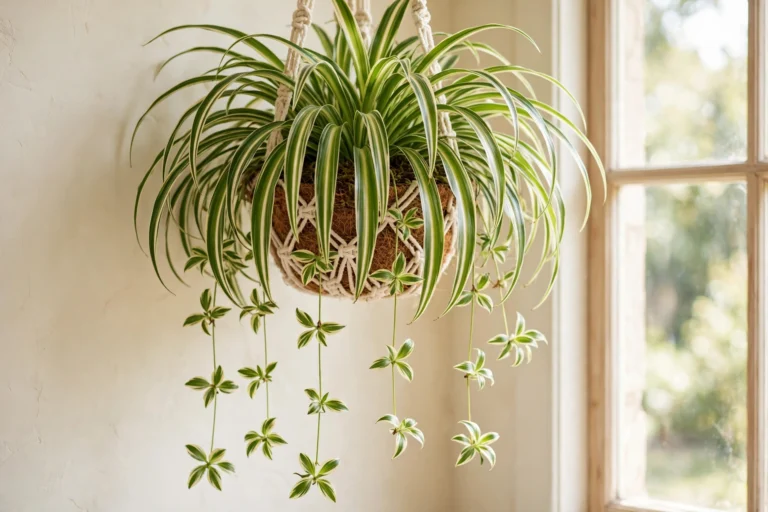
If your pet does chew a leaf, remove any remaining pieces from its mouth, and call your veterinarian or the ASPCA Animal Poison Control Center at (888) 426-4435 (a consultation fee may apply). Our full guide to snake plants and pet safety goes deeper, and if you would rather skip the worry entirely, our pet-safe houseplants list covers plants the ASPCA lists as non-toxic — the spider plant, later in this series, is the cheerful low-light alternative.
The hands-off rhythm
Snake plants do not want a routine; they want a glance. Once or twice a month, look yours over while you pass: leaves upright and firm, no yellowing at the base, pot feeling light. Water only when the soil is dry to the bottom — then soak it, drain it, and forget it again. Give it the brightest spot you can spare and it will repay you the way it has repaid patient owners for generations: by quietly growing, pupping, and asking for almost nothing. The plant everyone calls unkillable really is — as long as kindness doesn’t water it to death.
Snake plant care questions, answered
How often should I water a snake plant?
Only when the soil has dried out completely, all the way to the bottom of the pot — never on a fixed schedule. In a typical home that works out to every few weeks in spring and summer, and as little as every one to two months in winter. Check with a chopstick pushed to the bottom of the pot: if damp soil clings to it, wait.
Can a snake plant live in low light?
It can survive low light for a long time — that is where its reputation comes from — but it will barely grow there, its colors will fade, and wet soil becomes riskier because the plant drinks so slowly. For a plant that actually grows, bright indirect light is the real requirement.
Why is my snake plant turning yellow?
Almost always overwatering. Soil that stays wet rots the roots and rhizomes, and the leaves yellow from the base up, often turning soft at the same time. Unpot it, cut away anything black and mushy, and repot into fresh, dry, gritty mix. A single old leaf yellowing at the bottom of a healthy plant is the exception — that is just age.
Do snake plants really purify the air?
Not in any way you would notice. The claim traces back to a 1989 NASA study of plants in sealed chambers; later analysis showed you would need a room packed with plants to match simply opening a window. Snake plants do release oxygen at night — they open their leaf pores after dark, an adaptation to dry habitats — but enjoy yours for its looks and toughness, not as an air filter.
Why is it called mother-in-law’s tongue?
For the leaves: long, sharp-pointed, and — so the old joke goes — as cutting as a mother-in-law’s remarks. The politer name, snake plant, comes from the wavy, scale-like patterning on the leaves, which resembles snakeskin.
How fast does a snake plant grow, and how big does it get?
Slowly. Expect a few inches of new growth a year in good light, and almost none in a dark corner. Tall types commonly reach 2–4 feet indoors given the years to do it. With propagation, a single plant can effectively live for decades — owners regularly pass divisions of the same plant along for 25 years or more.
Will a leaf cutting keep the yellow edges of ‘Laurentii’?
No. This is the most common propagation disappointment: cuttings of variegated varieties grow into plain green plants, because the yellow margin tissue does not carry through a leaf section. To keep the stripes, propagate by division — separating a pup with its own roots reproduces the variety exactly.
Should I mist my snake plant?
No. It is a dry-land plant that stores water in its leaves; misting adds nothing it needs and leaves droplets sitting in the crown, where moisture invites rot. If the leaves look dusty, wipe them with a damp cloth instead — clean leaves take in more light.
Will my snake plant flower indoors?
Rarely, and there is no reliable trick to force it. A mature, well-lit plant sometimes sends up a stalk of small, greenish-white, sweetly fragrant flowers, usually in spring. Treat it as a pleasant surprise rather than a goal — flowering or not says nothing about whether your plant is healthy.



2 Comments